
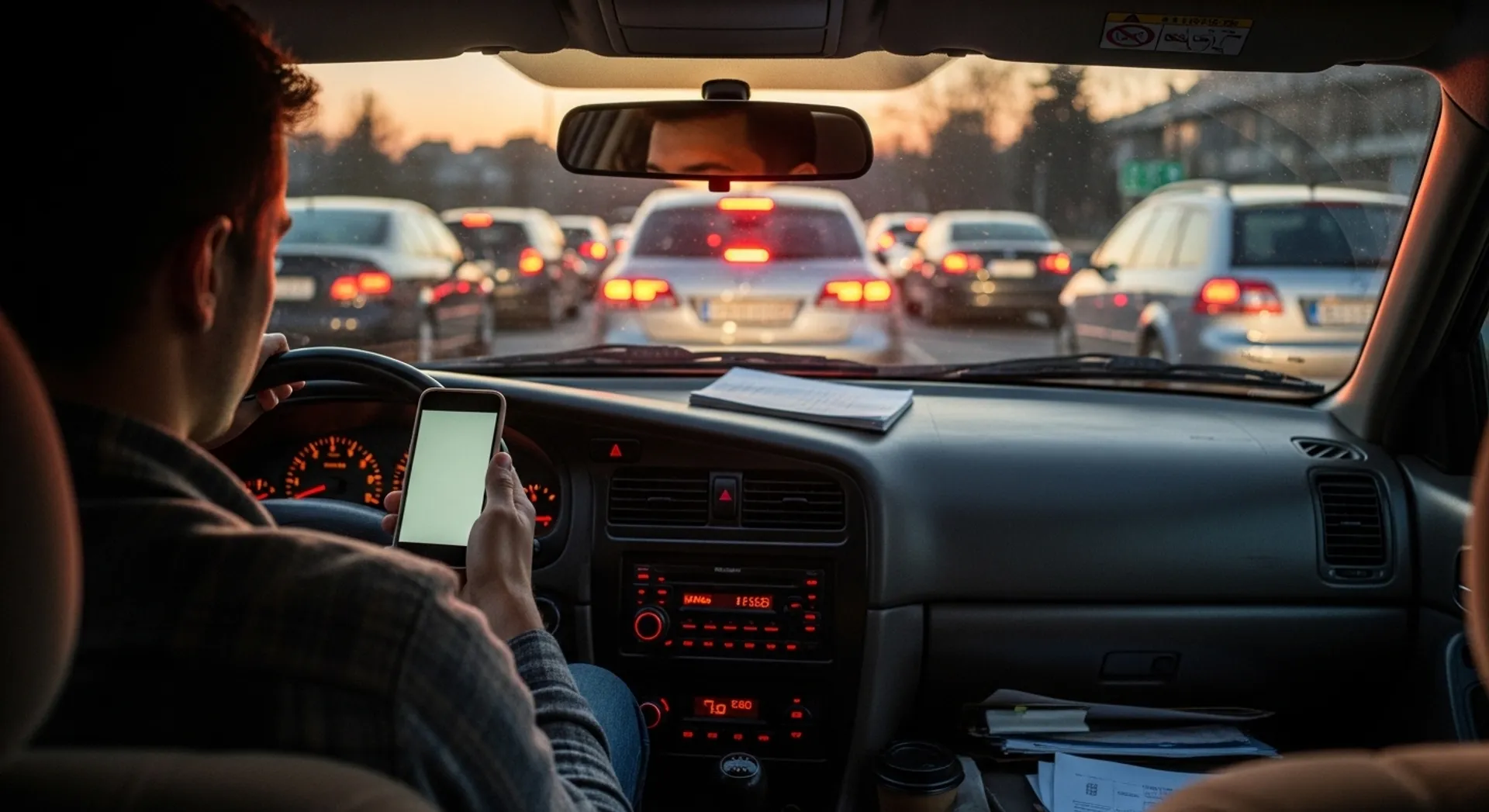
Distracted driving remains one of the most preventable causes of serious traffic injuries in the United States. Many people still think distraction only means texting, but the problem is broader than that. Drivers now divide their attention between phones, dashboard screens, navigation apps, voice commands, food, passengers, and other in-car distractions. When that happens, reaction time drops and the risk of a crash rises fast.
In 2026, this topic is especially relevant because April is National Distracted Driving Awareness Month. Federal safety agencies continue to warn that distracted driving is not a small issue. According to the National Highway Traffic Safety Administration, distracted driving killed 3,208 people and injured 315,167 people in 2024. NHTSA also says distraction affected an estimated 5% of fatal crashes and 13% of injury crashes that year. Those numbers show why distracted driving accident claims continue to matter for victims and families trying to recover after a crash.
For a site like Accidental Wiki, this is a strong fit. Your content already helps readers understand accident rights, injury claims, insurance issues, and the legal process. Distracted driving sits right at the center of those topics. It combines safety, liability, evidence, and recovery in one issue that many readers are already searching for.
Why Distracted Driving Accident Claims Are Getting More Attention
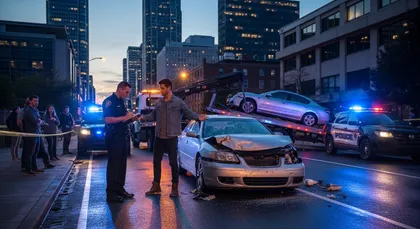
Distracted driving has been a major road safety issue for years, but modern technology keeps changing how distraction happens. Drivers no longer need to hold a phone in their hand to become unsafe. Touchscreens, app notifications, smart dashboards, streaming controls, and navigation prompts can all take a driver’s eyes and mind off the road.
Why distraction is more than just texting
Texting is one of the most dangerous forms of distraction because it affects visual, manual, and mental focus at the same time. Still, it is only one part of the problem. A driver can also become distracted by looking at a map, changing a playlist, reaching for an item, eating, or talking while focusing on something other than traffic.
Phones and screens create short but dangerous lapses
Many crashes happen because a driver looks away for only a few seconds. That sounds minor, but it is enough time to miss a red light, fail to notice stopped traffic, drift into another lane, or hit a pedestrian or cyclist. Short lapses often lead to rear-end collisions, intersection crashes, and lane-change accidents.
This makes distracted driving accident claims difficult in one important way. Drivers often minimize what happened. They may say they “just looked down for a second” or deny using a device at all. That is why accident victims need strong evidence early. The case often depends on proving what the driver was doing before impact.
People outside vehicles are also at risk
Distracted driving does not only injure drivers and passengers. The Centers for Disease Control and Prevention notes that about 1 in 5 people killed in crashes involving a distracted driver in 2019 were outside vehicles, including people walking and riding bikes. That matters because distracted driving claims often involve more than a two-car collision. They may also involve pedestrians, cyclists, and other vulnerable road users.
That broader accident pattern fits well with your site’s recent content direction. Accidental Wiki’s blog includes general accident-rights content, injury-law explainers, eyewitness guidance, and a March 2026 post on bike accident safety. That structure makes distracted driving a natural topic for internal linking and future expansion.
Why this topic fits accident recovery readers
People searching for distracted driving accident claims are usually not looking for theory. They want practical answers. They want to know what to do after a crash, what evidence matters, whether insurance will pay, and how fault gets proven. That is exactly where this topic connects with your existing posts.
For example, readers who need a broader legal foundation can be directed to What Is Personal Injury Law and How Does It Relate to Accidents?. Readers who are trying to understand next steps after getting hurt can also visit How to Navigate the Legal Process After an Injury from an Accident. Those internal links make sense because distracted driving claims usually involve both negligence analysis and claim-handling strategy.
Another strong internal link is The Role of Eyewitnesses in Accident Claims. In many distracted driving cases, witness statements become critical because they may confirm that the driver was looking down, swerving, or failing to react before the crash.
What Victims Should Do to Protect a Distracted Driving Injury Claim
After a distracted driving crash, victims often assume the facts will speak for themselves. That is a mistake. Claims are stronger when people act quickly, preserve evidence, and avoid saying too much before they understand the full extent of their injuries.
What evidence matters most after the crash
Every accident claim depends on proof, but distracted driving claims often need more than basic collision photos. The strongest cases combine scene evidence, witness accounts, official reports, medical records, and digital evidence when available.
Scene evidence, witnesses, and digital records can make the case
Photos of the vehicles, roadway, traffic signals, skid marks, debris, and visible injuries help explain how the collision happened. If nearby businesses, homes, or traffic cameras captured the crash, that footage may show whether the driver failed to react in time or was not watching the road. Eyewitnesses can also help fill in important details, especially if they saw the driver using a phone or driving erratically.
In some cases, phone records, app activity, dashcam video, or vehicle data may also become important. These details do not appear in every claim, but when they do, they can strongly support a negligence argument. That is why victims should preserve what they can early and speak with a lawyer before key evidence disappears.
Medical records are part of the legal proof too
Medical care does more than help you recover. It also creates a record that ties the injuries to the crash. Emergency treatment, follow-up visits, diagnostic scans, physical therapy, prescriptions, and work restrictions all help show the extent of the harm. Delays in treatment can give insurers a chance to argue that the injuries were minor or unrelated.
This also connects to your site’s broader recovery-focused content. Readers who want general post-accident guidance may benefit from your blog and resources pages, which already position Accidental Wiki as a hub for legal support, insurance help, and accident recovery education.
How insurance companies may try to weaken the claim

Insurance companies do not automatically accept that distraction caused the crash. Even when the other driver seems obviously careless, insurers often try to shift blame, reduce the value of injuries, or dispute the timeline of treatment. They may argue that the injured person stopped suddenly, changed lanes without warning, or was partly at fault for some other reason.
That is why victims should be careful with recorded statements. A quick comment like “I’m okay” or a guess about speed or timing can be used later to reduce the value of the claim. It is usually smarter to report the basic facts, continue medical treatment, and get legal advice before giving a detailed statement.
Insurance issues are also a strong match for your existing article structure. Readers who want more on this side of recovery should be guided toward the blog’s insurance-related content, including the post titled The Role of Insurance in Accidental Injury Claims, which appears in your blog archive.
Another useful internal path is the rights-focused content already on the site, including Understanding Your Rights: What to Know After an Accident. That post, along with your legal-process guide, helps build topical authority around the exact questions distracted driving victims usually ask after a crash.
For an outside authority source, the National Highway Traffic Safety Administration is a strong reference because it provides current distracted driving statistics, safety guidance, and official context for how serious this issue remains.
The bottom line is simple. Distracted driving accident claims matter because distraction keeps causing preventable injuries, and those cases often turn on evidence that can disappear quickly. In 2026, victims need to take these crashes seriously from the start. Fast medical care, good documentation, strong witness support, and a clear understanding of the legal process can make the difference between a weak claim and a strong recovery.