
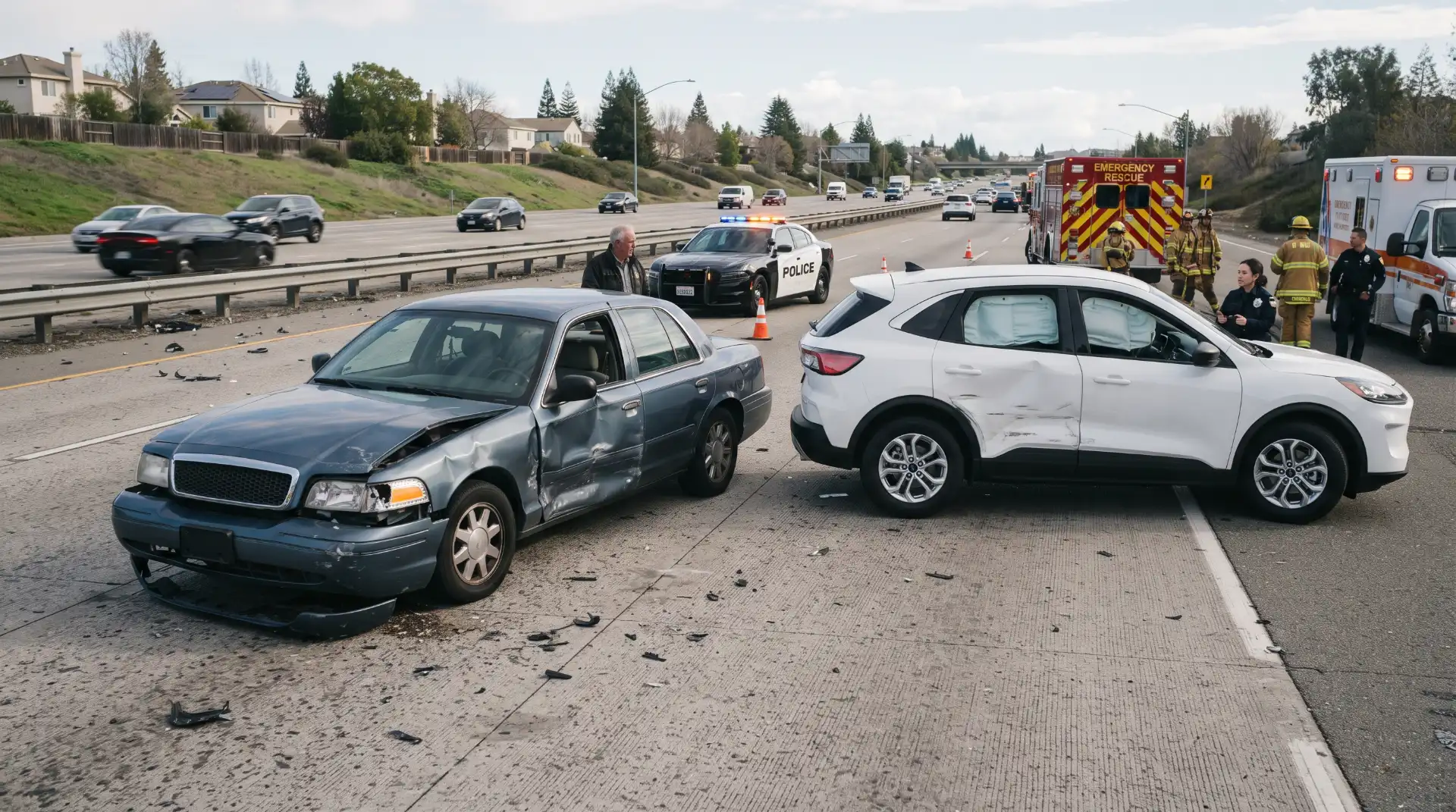
Cars have become substantially safer over the past several decades. Improvements in crash engineering, airbags, seat belts, electronic stability control, structural design, crash avoidance systems, and emergency response technology have changed the way vehicles protect occupants during collisions. At the same time, millions of Americans continue to drive vehicles that were built many years ago. For many households, keeping an older vehicle is financially practical, especially when replacing a car can involve a large loan, higher insurance costs, and other expenses.
However, vehicle age can matter when a crash occurs. An older car may lack safety equipment that became standard on newer vehicles, may have structural characteristics from an earlier generation of automotive engineering, or may have experienced years of wear and repairs. These factors do not mean that every older vehicle is unsafe or that every newer vehicle will prevent injuries. Crash outcomes depend on many variables, including collision type, vehicle size, speed, occupant position, seat belt use, road conditions, maintenance, and the characteristics of the vehicles involved.
The National Highway Traffic Safety Administration explains that vehicle safety has changed significantly over the decades, with newer vehicles incorporating improvements in both crash protection and crash avoidance. NHTSA’s vehicle safety information provides a useful overview of how engineering advances have changed occupant protection. NHTSA’s vehicle safety history is an authoritative resource for understanding those developments.
For U.S. drivers, understanding the relationship between aging vehicles and accident risk can help with vehicle maintenance, purchasing decisions, and preparation after a collision. It can also help accident victims understand why the age and condition of a vehicle may become relevant when investigating injuries and property damage.
Why Vehicle Age Matters in a Crash
A vehicle’s age is not automatically a measure of its safety. Some older vehicles are carefully maintained, have strong crash-test performance, and remain mechanically reliable. Conversely, a newer vehicle can become dangerous if it has serious mechanical defects, has been poorly maintained, or has sustained previous collision damage that was not properly repaired.
The important issue is that automotive safety technology has changed over time. Vehicles introduced in different model years were designed around different safety standards, testing procedures, engineering knowledge, and available technologies. As those standards evolved, manufacturers introduced new ways to protect occupants and prevent crashes.
For example, modern vehicles may include multiple airbags, improved side-impact protection, electronic stability control, automatic emergency braking, lane-departure warnings, blind-spot monitoring, stronger passenger compartments, and more sophisticated restraint systems. A much older vehicle may have only some of these features or may not have them at all.
NHTSA notes that modern vehicle safety improvements include changes to seat belts, airbags, vehicle structure, crash testing, and advanced technologies. The agency’s 5-Star Safety Ratings program also evaluates vehicles for crash protection and rollover resistance, while advanced technologies are increasingly part of vehicle safety evaluation.
This means two vehicles traveling at similar speeds can produce different outcomes in the same type of collision because their structures and safety systems respond differently to crash forces.
How Older Vehicle Designs Can Affect Crash Injuries
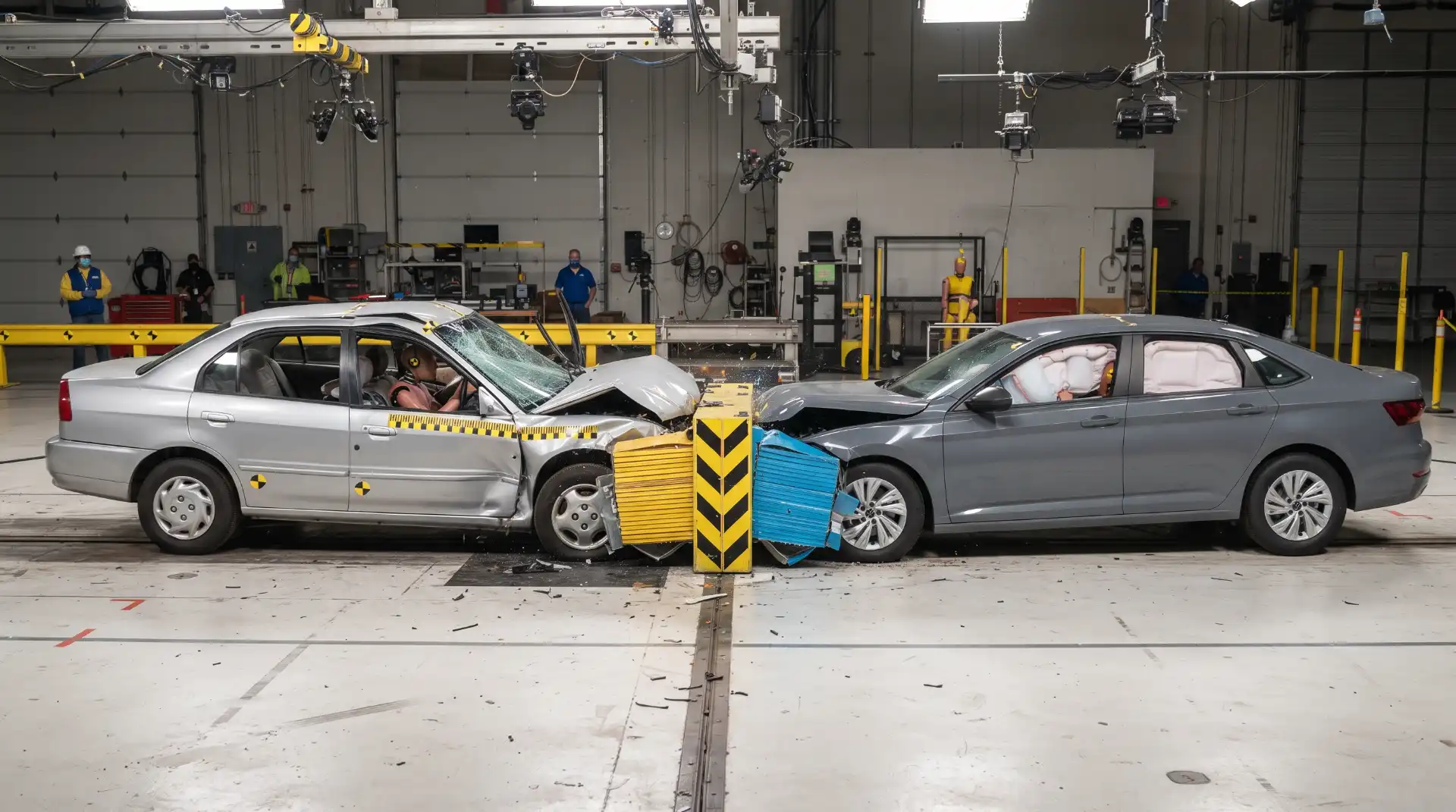
When a vehicle crashes, its structure is designed to absorb and manage energy. The passenger compartment is intended to provide a survivable space while other portions of the vehicle deform in controlled ways. Modern crash engineering has increasingly focused on managing forces before they reach vehicle occupants.
Older vehicle designs may not provide the same level of structural protection as newer designs. This is particularly relevant in severe frontal, side-impact, rollover, and offset crashes. Changes in vehicle construction can affect how crash forces travel through the vehicle and how much intrusion reaches the passenger compartment.
Side-impact crashes can be particularly important because there is generally less space between an occupant and the outside of the vehicle than there is in a frontal crash. Modern vehicles commonly incorporate reinforced door structures, side-impact airbags, curtain airbags, and other technologies designed to reduce injury risk.
The Insurance Institute for Highway Safety has documented differences associated with vehicle age and safety equipment. Research involving older drivers found that crash-involved drivers age 70 and older were more likely than middle-aged drivers to be in older vehicles and vehicles lacking certain safety features. The research also associated the absence of standard electronic stability control and head-protecting side airbags with increased fatality risk among older drivers.
That research focuses on older drivers, so it should not be interpreted as proof that every older vehicle creates the same level of risk for every driver. Instead, it illustrates a broader point: vehicle characteristics can influence the consequences of a crash, and some safety technologies available in newer vehicles were absent or less common in earlier models.
Older Cars May Lack Modern Crash-Avoidance Technology
Vehicle safety is not limited to what happens after a collision. One of the biggest developments in automotive safety has been the introduction of technologies intended to help prevent crashes in the first place.
Modern vehicles may use cameras, radar, sensors, and computer systems to identify potential hazards. Depending on the vehicle, these systems can provide warnings about vehicles in blind spots, detect lane departures, warn about potential forward collisions, or automatically apply the brakes in certain situations.
An older vehicle may not have these systems. A driver in an older car may therefore have fewer technological layers between a developing hazard and a collision.
This does not mean driver-assistance technology makes a newer vehicle accident-proof. These systems have limitations and may not function as expected in every weather, road, lighting, or traffic condition. Drivers remain responsible for paying attention and controlling their vehicles.
Nevertheless, the availability of crash-avoidance technology is one important distinction between many older and newer vehicles. NHTSA’s current 5-Star Safety Ratings program includes verification testing for advanced crash-avoidance technologies on selected 2026 model-year vehicles, demonstrating how these systems have become an established part of modern vehicle safety evaluation.
Electronic Stability Control and Loss-of-Control Crashes
Electronic stability control is another technology that can illustrate the difference between vehicle generations. The system is designed to help drivers maintain control when a vehicle begins to lose directional stability. It can be particularly relevant in situations involving sudden steering maneuvers, slippery roads, or other circumstances that can lead to a loss of control.
Many modern passenger vehicles have electronic stability control as standard equipment. Older vehicles may not have it, particularly models built before the technology became widely required.
IIHS research has found an association between the absence of standard electronic stability control and higher fatality risk in certain older-driver crash data. That finding does not mean ESC prevents every crash, but it demonstrates why the presence or absence of particular safety technologies can be relevant when evaluating differences between vehicle generations.
For drivers considering whether to keep an aging vehicle, checking which safety systems were included in the original model can be more informative than looking at the vehicle’s age alone. A 15-year-old vehicle with strong safety equipment and good maintenance is not necessarily equivalent to every other vehicle of the same age.
Airbags and Occupant Protection Have Evolved
Airbags have also changed significantly over the years. Early airbag systems were much less sophisticated than many systems found in current vehicles. Modern vehicles may have front, side, curtain, knee, and other airbags designed to work with seat belts and vehicle crash structures.
Side-impact protection is particularly important because side collisions can expose occupants to substantial forces over a relatively short distance. Head-protecting side airbags and reinforced passenger compartments can help reduce certain injury risks.
IIHS research involving older drivers found that the absence of standard head-protecting side airbags was associated with substantially higher odds of driver fatality in driver-side crashes. Again, this research does not mean an airbag guarantees survival or that every older vehicle without one will produce severe injuries. It demonstrates that occupant protection technology can influence crash outcomes.
Drivers should also remember that airbags are supplemental restraint systems. They are designed to work with seat belts, not replace them. Wearing a properly positioned seat belt remains one of the most important things occupants can do to reduce injury risk in a crash.
Vehicle Size and Weight Can Influence Crash Outcomes
Another issue that deserves attention is vehicle size and weight. When two vehicles collide, the forces experienced by occupants can be affected by differences in mass, structure, height, and compatibility between the vehicles.
IIHS research explains that lighter vehicles are generally disadvantaged when colliding with heavier vehicles. Vehicle design has also changed to improve compatibility between passenger cars, SUVs, and pickups. Modern vehicle engineering has reduced some of the risks associated with differences in vehicle height and structural alignment, although differences in size and weight still matter.
This becomes particularly relevant when an older compact car is involved in a collision with a larger pickup truck or SUV. The outcome will depend on the specific vehicles, collision direction, speed, restraint use, and other factors, but vehicle mass and structure can affect the forces experienced by occupants.
Older vehicles can therefore present two separate questions: how well the vehicle itself protects its occupants and how its size and structure interact with the other vehicle involved in the collision.
Mechanical Wear Is Another Concern With Aging Vehicles
Not every risk associated with an older car comes from the original design. Maintenance becomes increasingly important as a vehicle accumulates years and miles.
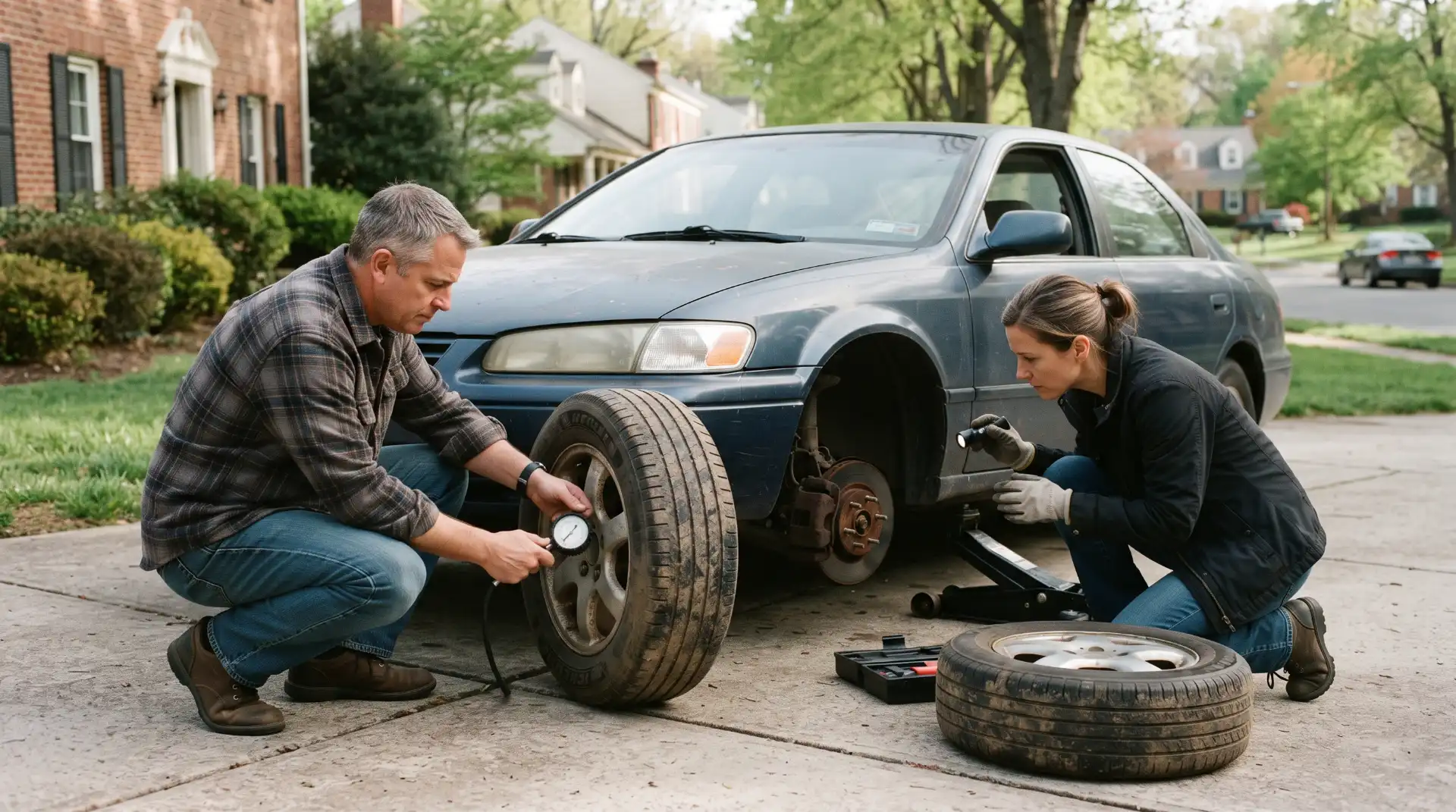
Brakes, tires, suspension components, steering components, belts, hoses, lights, windshield wipers, and other parts can deteriorate over time. Some components wear gradually, while others can deteriorate because of age even when a vehicle has relatively low mileage.
Tire condition is particularly important because tires provide the primary contact between the vehicle and the road. Old, worn, underinflated, damaged, or improperly maintained tires can reduce traction and handling. In wet conditions, inadequate tire tread can make it more difficult to maintain control or stop effectively.
Brake problems can also increase stopping distances. A vehicle may continue operating even when brake components are significantly worn, which is why routine inspection matters. A driver who waits until a serious mechanical problem develops may face a greater risk of losing control or being unable to stop in time to avoid a collision.
Suspension and steering problems can also affect handling. Worn components may produce symptoms such as uneven tire wear, excessive bouncing, pulling to one side, unusual noises, or changes in steering response. These issues should be evaluated by a qualified mechanic rather than ignored.
Older Vehicles and the Risk of Previous Crash Damage
Another factor is a vehicle’s history. An older vehicle may have been involved in one or more previous crashes. Even when a vehicle looks repaired from the outside, improperly repaired structural damage can affect how the vehicle performs in a later collision.
This is particularly important when purchasing a used vehicle. Buyers should consider obtaining a vehicle history report, checking for title branding, reviewing available maintenance records, and having the vehicle inspected by an independent mechanic or qualified body repair professional.
Previous flood damage can also create long-term electrical and mechanical problems. Vehicles that have been exposed to significant water can develop corrosion and electrical faults that may not become obvious immediately.
A vehicle’s odometer reading alone therefore does not tell the complete story. Two vehicles of the same model year and mileage can have very different maintenance histories and safety conditions.
How Vehicle Maintenance Can Reduce Accident Risk
Keeping an older vehicle properly maintained cannot transform it into a newer vehicle, but maintenance can help preserve the safety systems and mechanical functions it already has.
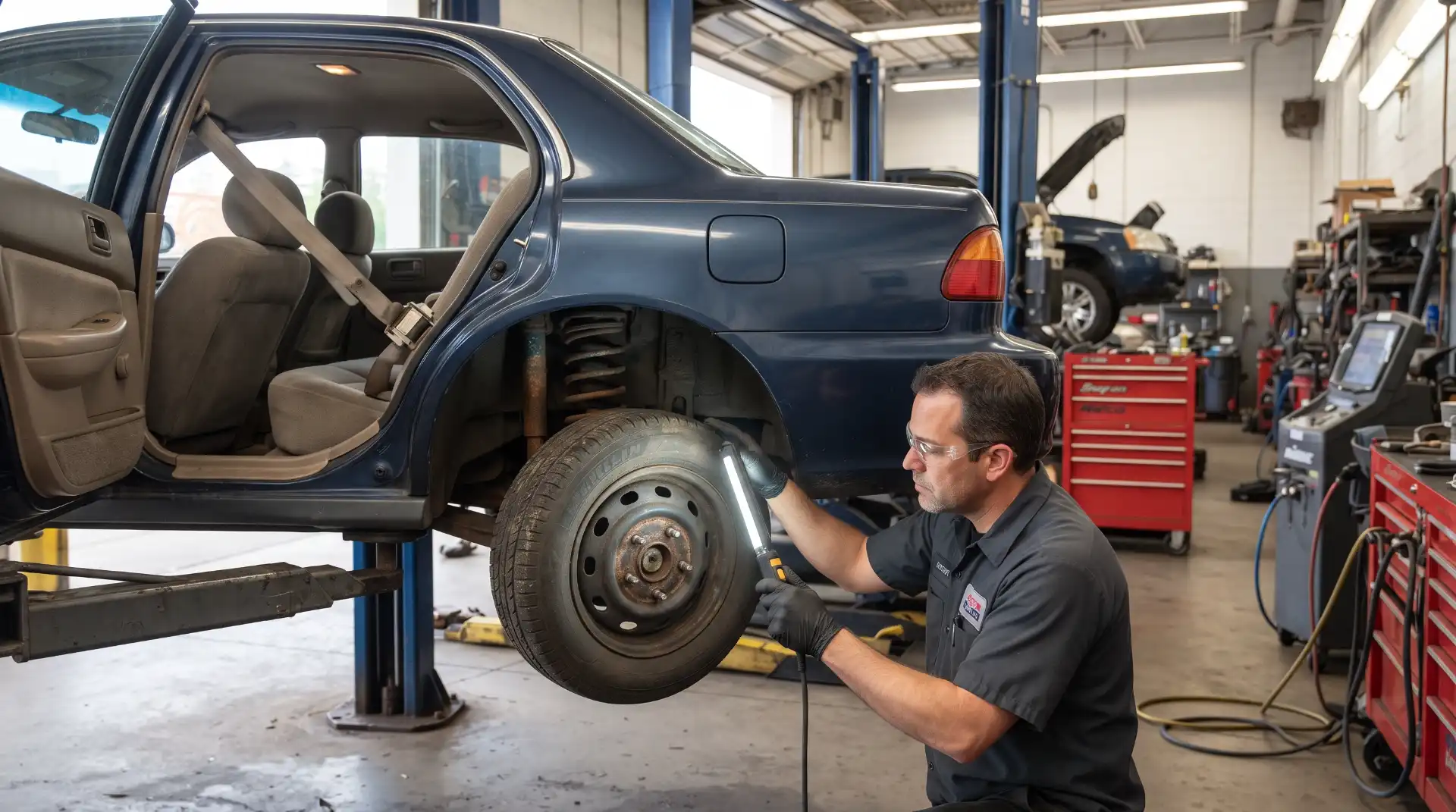
Routine inspections should address tires, brakes, steering, suspension, lights, windshield condition, seat belts, airbags, fluid levels, and warning lights. Drivers should also follow the manufacturer’s maintenance schedule when possible.
Dashboard warning lights should not automatically be treated as minor inconveniences. Warning indicators can identify problems with systems that affect vehicle operation or occupant protection. A persistent airbag warning, for example, should be investigated because it can indicate a problem with the supplemental restraint system.
Likewise, a vehicle that pulls to one side, vibrates during braking, develops unusual steering behavior, or produces new mechanical noises deserves professional attention. Continuing to drive without determining the cause may increase the likelihood of a mechanical failure.
Why Newer Does Not Always Mean Safer in Every Situation
It is important not to oversimplify the relationship between vehicle age and safety. A newer vehicle is not automatically safer in every circumstance, and an older vehicle is not automatically dangerous.
Vehicle size, design, crash-test performance, maintenance, driver behavior, road conditions, weather, occupant restraint use, and collision circumstances all matter. A newer small vehicle may have different crash characteristics from a larger vehicle, while an older vehicle in excellent condition may perform better than another vehicle that has been neglected.
The most useful approach is to look at the complete safety profile. Drivers shopping for a used vehicle can research its crash-test ratings, standard safety equipment, recall history, reliability, and maintenance needs instead of relying only on the model year.
IIHS provides a searchable vehicle-rating database covering crashworthiness and crash avoidance and mitigation. The organization allows consumers to research vehicle safety ratings by model and year, which can be useful when comparing used vehicles. The IIHS vehicle ratings database is one useful resource for that process.
How Aging Vehicles Can Affect Injuries After a Crash
When an older vehicle is involved in a collision, the resulting injuries can vary considerably. Occupants may suffer whiplash, fractures, chest injuries, head injuries, internal injuries, spinal injuries, or soft-tissue damage depending on the crash.
The severity of an injury depends on the forces involved and the individual’s circumstances. Seat belt position, occupant age, seating position, vehicle structure, airbag deployment, impact direction, and medical history can all affect the outcome.
Older adults can be particularly vulnerable to serious consequences from crashes. IIHS reports that people age 70 and older have increased fatal crash rates per mile traveled, with much of the increased fatality risk attributed to greater susceptibility to injury rather than simply being more likely to crash. In 2024, 5,679 people age 70 and older died in motor vehicle crashes in the United States.
This distinction is important because it shows why both vehicle safety and occupant vulnerability matter. Improving vehicle protection can be especially valuable for occupants who may have more difficulty recovering from serious trauma.
What Drivers Should Check Before Keeping an Older Vehicle
Drivers who rely on an aging vehicle can take practical steps to understand its condition. Start by identifying the exact year, make, model, and trim level because safety equipment can vary even between different versions of the same model.
Next, research the vehicle’s crash-test history and determine which safety technologies were standard or optional when the vehicle was manufactured. This can reveal whether the vehicle includes features such as electronic stability control, side airbags, curtain airbags, forward collision warning, automatic emergency braking, or blind-spot monitoring.
Maintenance history should then be reviewed. Regular oil changes are important, but vehicle safety involves much more than the engine. Brake inspections, tire replacement, suspension work, steering repairs, lighting, battery condition, and other maintenance should be considered.
Finally, drivers should pay attention to how the vehicle behaves. Changes in braking, acceleration, steering, handling, or warning lights can signal problems that deserve professional inspection.
Buying a Used Vehicle: Safety Should Be Part of the Decision
For people replacing an older car, safety research should be part of the purchasing process. Price is understandably important, but the cheapest vehicle may not provide the best long-term value if it lacks important safety equipment or requires extensive repairs.
Consumers can compare vehicles by model year, body style, crash-test performance, safety technology, vehicle condition, and maintenance history. A used vehicle does not have to be brand new to provide modern safety equipment. Many used vehicles offer technologies that were unavailable or uncommon in older generations.
Checking recall information is also important. A vehicle with an unresolved safety recall may require repairs before it is considered fully road-ready. Buyers should confirm the vehicle identification number and check available manufacturer or government recall information.
NHTSA’s vehicle safety resources provide information about crash ratings and vehicle safety, while the agency’s current program continues to test newer models for crash protection and advanced safety technologies.
What Happens When an Older Vehicle Is Involved in a Crash?
After a collision, the age of a vehicle may become relevant to the investigation, but it does not automatically determine who caused the accident. Liability generally depends on the facts surrounding the crash, including driver behavior, traffic violations, road conditions, vehicle defects, maintenance issues, and other contributing factors.
For example, an older vehicle may sustain more damage than a newer vehicle in the same collision. Greater damage to the older car does not by itself prove that the other driver was negligent. Similarly, the fact that a vehicle lacked modern safety equipment does not automatically make its owner responsible for injuries.
Accident investigations may consider photographs, police reports, witness accounts, vehicle damage, medical records, traffic-camera footage, vehicle data, and expert analysis. The specific evidence required depends on the circumstances of the case and applicable state law.
Accidental Wiki’s existing guide on how to navigate the legal process after an injury from an accident discusses documenting an accident, notifying insurance companies, seeking medical care, understanding legal deadlines, and gathering evidence. That resource can provide a useful next step for readers dealing with the aftermath of a collision.
Documenting Vehicle Condition After an Accident
Photos can be particularly useful after a crash. If it is safe to do so, drivers can photograph the vehicles from multiple angles, including the front, rear, sides, wheels, windshield, interior, airbags, seat belts, and visible damage. Photographs of the roadway, traffic controls, debris, weather conditions, and surrounding area may also provide useful context.
Medical documentation is equally important when injuries occur. Some crash injuries may not be immediately obvious, and people should seek appropriate medical evaluation rather than assuming they are unharmed because they can walk away from the collision.
Witness information can also become important. Accidental Wiki’s guide on the role of eyewitnesses in accident claims explains how witnesses can provide independent observations about what happened before and during an accident. Preserving witness contact information soon after a crash can be helpful when accounts of the incident differ.
Insurance Claims and Older Vehicles
Vehicle age can also become relevant to an insurance claim involving property damage. The value of an older vehicle is usually different from the value of a newer vehicle, and insurers may consider factors such as the vehicle’s pre-crash condition, mileage, equipment, comparable vehicles, and market value.
In a serious crash, an older vehicle may be considered a total loss when the cost of repairing it is high relative to its value. This can occur even when the vehicle was mechanically reliable and important to the owner.
Drivers should keep maintenance records, receipts for major repairs, and documentation showing significant upgrades or replacement parts. These records may help establish the vehicle’s condition and history when its value is being evaluated.
Property damage and personal injury are separate issues. A vehicle’s market value does not determine the seriousness of injuries suffered by its occupants. Medical treatment and injury documentation remain important when people are physically harmed in a collision.
Older Vehicles and Personal Injury Claims
If another driver’s negligence causes a collision involving an older vehicle, the fact that the injured person’s car was old does not automatically eliminate a potential injury claim. Personal injury cases generally focus on the circumstances of the accident, the injuries suffered, and the applicable law.
Evidence may include medical records, accident reports, photographs, witness statements, employment records, and other documentation showing how the accident affected the injured person.
Readers can also review Accidental Wiki’s existing article What Is Personal Injury Law and How Does It Relate to Accidents? for a broader explanation of negligence, damages, and personal injury claims.
Because personal injury laws vary among states, readers should avoid assuming that rules from one state apply nationwide. Deadlines, insurance requirements, comparative-fault rules, and available damages can differ significantly depending on where the crash occurred.
Can an Older Vehicle Be Made Safer?
There are practical ways to improve the safety of an older vehicle, although modifications cannot recreate every feature found in a modern vehicle. Keeping tires properly inflated, replacing worn tires, maintaining brakes, repairing steering and suspension problems, fixing lighting issues, and addressing dashboard warnings can help maintain safe operation.
Drivers should also ensure that seat belts function correctly and that occupants use them properly. Child passengers should be secured in appropriate child restraint systems based on their age, size, and applicable state requirements.
Some aftermarket safety products may be available, but consumers should be cautious about modifications that claim to dramatically improve crash protection without credible evidence. Vehicle safety systems are engineered as integrated systems, and installing an aftermarket component does not necessarily produce the same protection as factory-designed equipment.
Why Vehicle Replacement Can Be a Safety Decision
For some drivers, replacing an aging vehicle is not simply a financial or convenience decision. It can also be a safety consideration when the vehicle has significant mechanical problems, lacks important safety technologies, has serious corrosion, has been extensively damaged, or no longer meets the driver’s transportation needs.
That does not mean everyone should replace an older vehicle. Vehicle replacement can be expensive, and financial circumstances differ widely. The more useful approach is to assess the vehicle’s actual condition and safety equipment and compare those factors with the cost of maintaining or replacing it.
A driver considering a replacement can compare used and new vehicles by safety ratings rather than focusing only on price or appearance. A relatively affordable used vehicle from a newer generation may offer substantial safety improvements without requiring the expense of a brand-new model.
Older Vehicles in Today’s U.S. Traffic Environment
Modern American roads include a wide mixture of vehicles. A driver may share the road with compact cars, large SUVs, pickup trucks, commercial vans, motorcycles, bicycles, and increasingly sophisticated electric vehicles.
This mixed vehicle environment makes compatibility and crash protection important considerations. IIHS research indicates that vehicle design changes have improved compatibility between cars and newer SUVs, although differences in size and weight can still influence crash outcomes.
At the same time, drivers are increasingly encountering vehicles equipped with crash-avoidance technology. Newer vehicles may be able to detect potential hazards and warn or intervene under certain conditions, while an older vehicle may provide little or no technological assistance.
These differences do not make an older vehicle automatically unsafe. They demonstrate why drivers should understand the limitations of the vehicles they operate and maintain them appropriately.
Practical Safety Tips for Drivers of Aging Vehicles
Drivers who continue using an older vehicle can reduce avoidable risks by treating maintenance as part of their overall safety strategy. Regular professional inspections can identify problems before they become major failures, while checking tire pressure and condition, lights, brakes, and warning indicators can help identify issues between service appointments.
Driving habits also matter. Maintaining a reasonable following distance, adjusting speed for weather and traffic, avoiding distractions, and using seat belts can reduce crash risk regardless of vehicle age. An older vehicle may have fewer technological safety systems, making attentive driving particularly important.
Long-distance drivers should consider having their vehicle inspected before major road trips. A pre-trip inspection can identify tire problems, weak batteries, worn brakes, fluid leaks, and other issues that could create problems far from home.
Frequently Asked Questions About Aging Vehicles and Crash Injuries
Are older cars automatically more dangerous?
No. Vehicle age alone does not determine whether a car is safe. Maintenance, crashworthiness, safety equipment, vehicle size, previous damage, and driving conditions all matter. However, older vehicles may lack safety features and structural improvements that became available in newer generations.
Do newer cars protect occupants better in crashes?
Many newer vehicles incorporate engineering improvements and safety technologies that were not available in older vehicles. These improvements can include stronger occupant compartments, additional airbags, electronic stability control, and crash-avoidance systems. Actual crash performance varies by model and year, so consumers should research specific vehicles rather than relying only on age.
Can poor maintenance make an older vehicle more dangerous?
Yes. Worn tires, faulty brakes, steering problems, suspension defects, broken lights, and other mechanical issues can affect vehicle control and increase the risk of a crash. Regular inspections and timely repairs are important for older vehicles.
Does an older vehicle mean the driver is responsible for an accident?
No. Vehicle age does not automatically establish fault. Liability depends on the facts of the collision and the applicable law. Evidence such as traffic violations, driver behavior, road conditions, vehicle defects, maintenance problems, witness accounts, and crash evidence may all be relevant.
What should I do if I am injured in a crash involving an older vehicle?
Seek appropriate medical attention, report the accident as required, document the scene and vehicle damage when it is safe to do so, preserve relevant records, and notify your insurer according to your policy requirements. If the accident involves significant injuries or disputed responsibility, obtaining advice about the laws applicable to the state where the crash occurred may also be appropriate.
Final Thoughts on Aging Vehicles and Accident Risk
Aging vehicles remain an important part of the American transportation system, and millions of drivers depend on cars that are several years or even decades old. Vehicle age should not automatically be treated as a safety failure, but it is reasonable to recognize that automotive engineering has advanced significantly over time.
Modern vehicles can offer structural improvements, improved restraint systems, additional airbags, electronic stability control, and technologies designed to help prevent or reduce the severity of certain crashes. Older vehicles may lack some of these features, while years of use can introduce additional concerns involving tires, brakes, suspension, steering, electrical systems, and previous damage.
For drivers, the most useful approach is to evaluate the entire vehicle rather than focusing on its model year alone. A well-maintained older vehicle can remain dependable, while an improperly maintained vehicle of any age can create serious risks. Consumers considering a replacement can compare crash-test ratings and safety equipment, while drivers keeping an older vehicle should prioritize inspections and necessary repairs.
When an accident occurs, vehicle age may be one piece of the investigation, but it is not automatically evidence of fault. The circumstances of the collision, the condition of the vehicles, driver conduct, injuries, and applicable state law all need to be considered.
Understanding these issues can help U.S. drivers make more informed decisions about maintenance, vehicle replacement, crash preparedness, and what to do after an accident. The goal is not simply to have a newer vehicle, but to understand the safety characteristics of the vehicle being driven and take reasonable steps to reduce preventable risks.
Disclaimer: This article is provided for general educational purposes and is not legal, medical, insurance, or automotive repair advice. Laws and insurance requirements vary by state. Anyone involved in a serious accident should consider speaking with an appropriate qualified professional about their specific circumstances.