
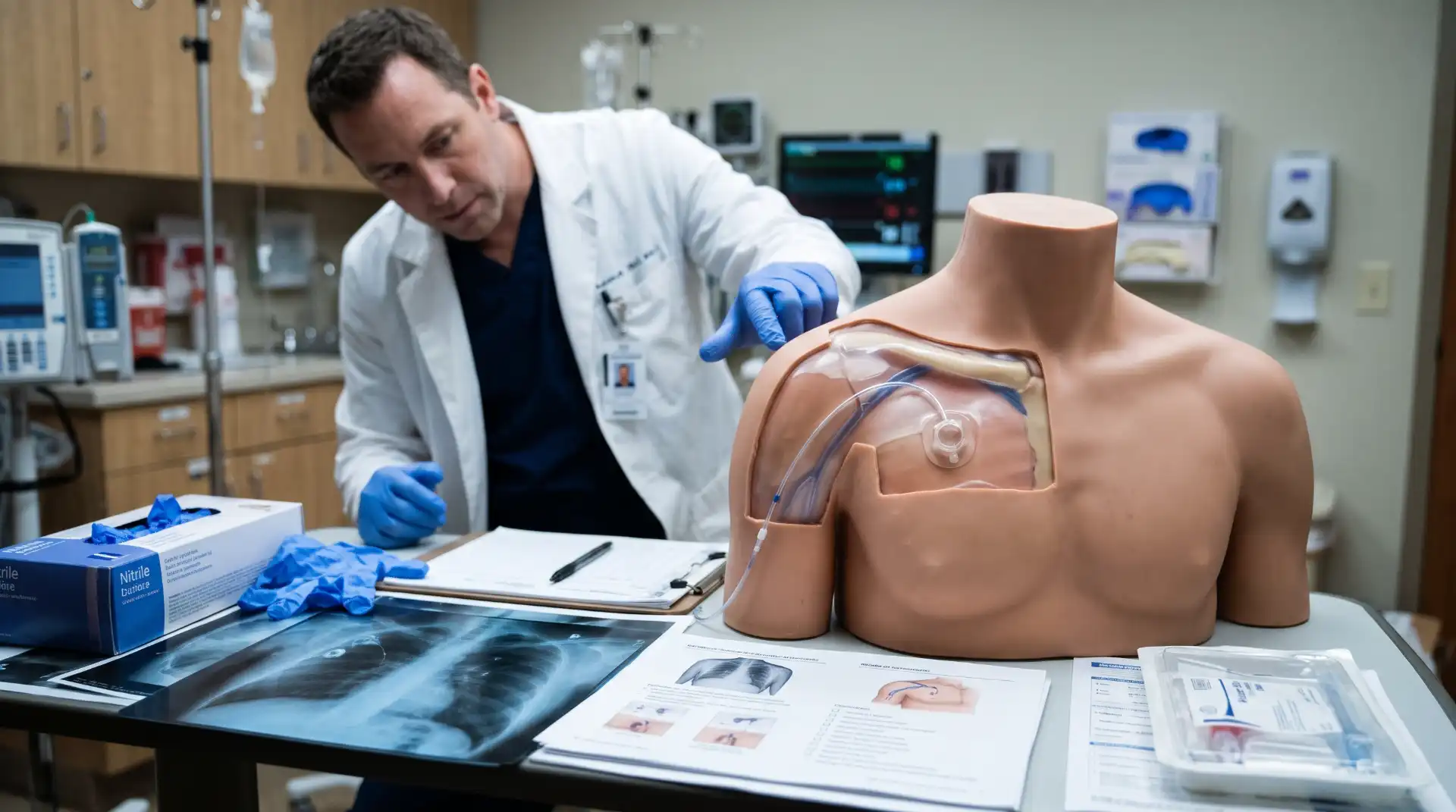
Implanted medical devices have transformed modern healthcare by making it easier for patients to receive medications, chemotherapy, antibiotics, fluids, and other treatments over extended periods. For individuals undergoing cancer treatment or managing serious chronic illnesses, an implanted vascular access port can significantly reduce the discomfort and inconvenience associated with repeated needle insertions and intravenous procedures. These devices are designed to provide dependable access to the bloodstream while remaining beneath the skin for weeks, months, or sometimes years.
However, when an implanted medical device fails, the consequences can be extremely serious. Patients who depend on these devices may experience unexpected medical complications, additional surgeries, bloodstream infections, blood clots, internal bleeding, or injuries involving the heart and major blood vessels.
One area receiving considerable attention in the United States is litigation involving Bard implanted port catheter products, including devices associated with the Bard PowerPort family. Patients have alleged that certain implanted port catheters were defectively designed or manufactured and that their construction could contribute to material degradation, catheter fractures, infections, and other complications.
These allegations have resulted in extensive product liability litigation in federal court. The cases raise important questions about medical device testing, product warnings, manufacturing practices, patient safety, and the responsibilities of companies that develop and distribute implantable medical equipment.
The litigation has also produced significant developments in 2026. A federal jury awarded $40 million in compensatory damages in one bellwether case involving an alleged catheter fracture, while other bellwether cases have resulted in defense verdicts. These different outcomes demonstrate why individual medical evidence and the circumstances surrounding each injury remain important.
For patients and families, understanding the potential risks of implanted port catheters can help them recognize concerning symptoms, obtain appropriate medical attention, preserve relevant records, and explore possible legal options.
This guide examines how implanted ports work, the injuries associated with Bard catheter products, the allegations involved in current litigation, and the evidence that may matter when pursuing a defective medical device claim in the United States.
What Are Bard Implanted Port Catheters?
Implanted port catheters are medical devices designed to provide repeated access to a patient’s bloodstream without requiring a new conventional intravenous line for every treatment.
They are frequently used in oncology, particularly for patients receiving chemotherapy. They may also be prescribed to individuals who require long-term antibiotic treatment, frequent blood draws, intravenous nutrition, or other therapies that involve repeated access to central veins.
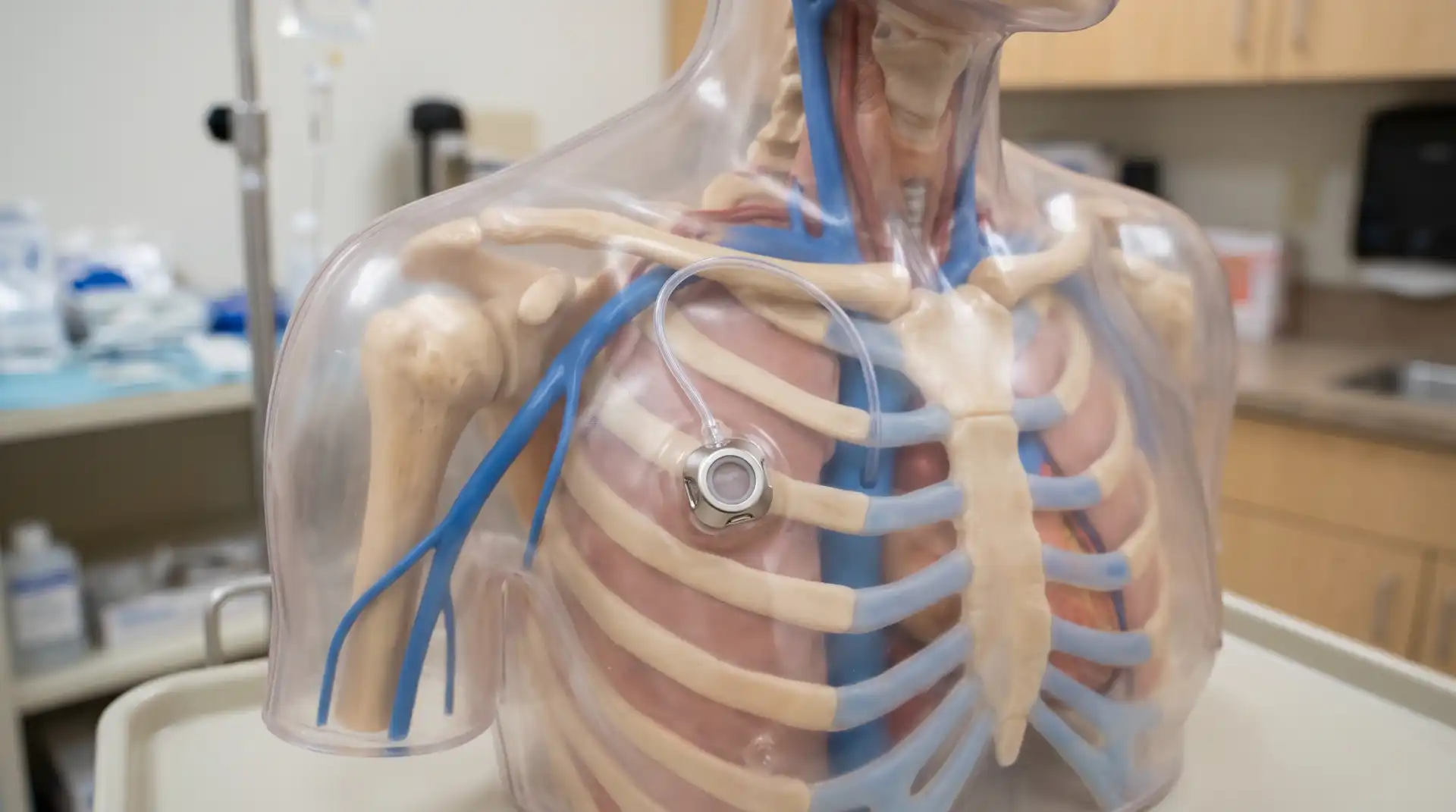
A typical implanted port contains two primary components: a small reservoir and a flexible catheter.
The reservoir, commonly called the port, is placed beneath the skin, often in the upper chest. A healthcare professional accesses it using a special needle that passes through the skin into the reservoir.
The catheter is a flexible tube connected to the reservoir. It extends into a large vein, allowing medication or fluids to enter the bloodstream.
Bard has manufactured and marketed several types of implanted vascular access devices. Its products have been used in hospitals, cancer treatment centers, and other medical facilities throughout the United States.
Bard became part of Becton, Dickinson and Company (BD), a global medical technology company, following BD’s acquisition of C. R. Bard in 2017.
Understanding the Bard PowerPort
The Bard PowerPort is among the products associated with the current implanted port catheter litigation. It is designed to provide central venous access and can be used for certain power-injection procedures when the specific device and catheter are approved for that purpose.
Power-injectable ports are designed to withstand the pressure associated with particular contrast-enhanced imaging procedures, including certain CT scans.
However, not every implanted port is suitable for power injection. Patients and medical professionals must follow the instructions applicable to the specific device model.
The Bard implanted port catheter litigation involves allegations concerning the materials and design of certain products, rather than a conclusion that every Bard device is defective.
It is important to distinguish between different Bard products, including implanted ports and externally placed or peripherally inserted catheters. These devices have different designs, indications, and potential complications.
For example, a PowerPort implanted beneath the skin is not the same product as a PowerPICC catheter inserted through a peripheral vein. A safety notice involving one product should not automatically be treated as applying to another.
Why Are Bard Implanted Port Catheters Facing Product Liability Allegations?
The central issue in the Bard implanted port catheter litigation involves allegations that certain catheter materials and design features may contribute to deterioration and device failure.
Plaintiffs generally contend that the catheter components of certain implanted ports contain barium sulfate, a substance used to make the device visible during medical imaging.
Barium sulfate serves an important purpose because radiopaque materials help healthcare professionals identify medical devices through X-rays and other imaging techniques.
However, plaintiffs allege that the concentration, distribution, or physical characteristics of this material may compromise the structural integrity of the catheter under certain conditions.
According to the allegations, changes in the catheter material may contribute to surface irregularities, cracks, weakened areas, and other defects that increase the possibility of device failure.
The litigation also includes allegations concerning polyoxymethylene, commonly known as POM, a polymer used in certain Bard implanted port components.
Some plaintiffs contend that inadequate stabilization or manufacturing controls involving this material may contribute to degradation, cracking, or other structural problems.
These claims form part of the broader legal dispute over whether the products were reasonably safe, adequately tested, and accompanied by appropriate warnings.
Importantly, these are allegations that must be evaluated through evidence. They should not be interpreted as proof that every implanted Bard port will deteriorate or cause an injury.
Allegations Concerning Barium Sulfate
Barium sulfate is commonly used in medical applications because of its radiopacity, meaning it can be detected through imaging.
In the Bard litigation, plaintiffs allege that the material’s presence and characteristics within certain catheter components may affect the surrounding polymer structure.
One proposed mechanism involves the development of small surface imperfections or changes in the material that could weaken the catheter over time.
If a catheter loses structural integrity, it may become more vulnerable to cracking or breaking under mechanical stress.
Plaintiffs argue that these problems could increase the risk of catheter fracture, infection, and blood clot formation.
The defense disputes liability, and the scientific and legal questions surrounding individual devices must be evaluated through the evidence presented in each case.
Allegations Concerning Polymer Degradation
Another issue concerns the polymer materials used in certain implanted port components.
Polymers must maintain their physical properties while exposed to the conditions inside the human body. They may be subjected to repeated movement, bending, pressure, chemical exposure, and other mechanical stresses.
If a material develops cracks or weak points, its ability to withstand these conditions may be reduced.
In the litigation, plaintiffs have alleged that certain Bard products may be vulnerable to degradation associated with their material composition or manufacturing processes.
Determining whether a particular catheter failed because of a product defect requires more than identifying the material used in its construction. Investigators may need to examine the device, its manufacturing history, the patient’s medical records, and the circumstances surrounding the failure.
Common Bard Implanted Port Catheter Injuries
Implanted port catheter complications can range from relatively minor problems to serious medical emergencies.
Some complications occur during implantation or routine use, while others may develop months or years after a device has been placed.
The injuries alleged in Bard implanted port catheter lawsuits include catheter fractures, migration, blood clots, infections, vascular injuries, and tissue damage.
The presence of one of these complications does not automatically establish that a device was defective. Nevertheless, patients experiencing unusual symptoms should receive prompt medical evaluation.
1. Catheter Fracture or Breakage
Catheter fracture is one of the central issues in Bard implanted port catheter litigation.
A catheter fracture occurs when the flexible tube develops a break, crack, or complete separation.
Depending on the location and severity of the damage, a portion of the catheter may remain inside the patient’s body.
A broken catheter can create several medical concerns. Medication may not reach its intended destination, and fragments may move through the bloodstream.
In certain circumstances, a separated catheter fragment can travel toward the heart or pulmonary circulation.
Patients may experience symptoms such as chest discomfort, shortness of breath, palpitations, swelling, or unexplained pain. However, some catheter failures may initially produce few obvious symptoms.
Medical professionals may use imaging procedures to identify the location and condition of the catheter.
When a fracture is confirmed, treatment depends on the location of the damaged component and the patient’s overall medical condition. Some patients may require an interventional radiology procedure or surgery to retrieve a fragment.
The need for an additional procedure can create substantial physical, emotional, and financial difficulties, especially for someone already undergoing treatment for a serious illness.
2. Catheter Migration
Catheter migration occurs when a catheter or a separated portion of the device moves from its intended position.
A properly positioned catheter is designed to remain in a specific location so that medications and other fluids can be delivered safely.
Movement may occur because of several factors, including mechanical forces, changes in catheter position, device damage, or problems involving the original placement.
When a catheter fragment separates, it may travel through the bloodstream and potentially reach the heart or pulmonary arteries.
The consequences depend on where the fragment moves and whether it interferes with normal blood flow or damages surrounding structures.
In some cases, healthcare professionals may attempt to retrieve the fragment using specialized catheter-based techniques. More complicated cases may require surgical intervention.
For patients, an unexpected device migration can mean hospitalization, additional diagnostic testing, interruption of treatment, and increased medical expenses.
3. Blood Clots and Thrombosis
Thrombosis refers to the formation of a blood clot within a blood vessel.
Central venous catheters can increase the risk of thrombosis because they occupy space within a blood vessel and may affect normal blood flow.
Blood clots can also develop because of cancer, chemotherapy, inflammation, immobility, and other medical conditions.
In Bard implanted port catheter litigation, plaintiffs have alleged that certain device characteristics may contribute to conditions that encourage clot formation.
A clot associated with a central venous catheter may cause swelling, discomfort, redness, or pain in the arm, shoulder, neck, or upper chest.
Some patients may develop more serious complications if a clot travels to the lungs and causes a pulmonary embolism.
Symptoms of pulmonary embolism can include sudden shortness of breath, chest pain, rapid heartbeat, coughing, dizziness, or fainting. These symptoms require emergency medical evaluation.
Healthcare providers may use ultrasound, CT imaging, blood tests, and other diagnostic methods to investigate suspected thrombosis.
Treatment may involve anticoagulant medication, device management, or other interventions depending on the patient’s condition.
4. Bloodstream Infections and Sepsis
Infection is another important complication involving implanted vascular access devices.
A port creates a direct pathway for medication and fluids to enter the bloodstream. Although medical professionals use sterile techniques and established infection-prevention procedures, bacteria can sometimes enter the system.
Infections may develop around the port pocket, along the catheter, or within the bloodstream.
Patients with catheter-related bloodstream infections may experience fever, chills, sweating, weakness, confusion, or an unexplained deterioration in their overall condition.
In more serious cases, an infection can progress to sepsis.
Sepsis is a life-threatening medical emergency involving the body’s extreme response to infection. It can cause organ dysfunction, dangerously low blood pressure, and other severe complications.
Treatment may involve blood cultures, intravenous antibiotics, hospitalization, and removal of the implanted device when medically necessary.
Cancer patients can face additional challenges because chemotherapy and certain underlying conditions may weaken the immune system.
In the Bard litigation, plaintiffs have alleged that catheter material characteristics and surface degradation could contribute to bacterial colonization and infection.
However, catheter infections can have multiple causes. Establishing whether a particular infection resulted from a defective device requires careful medical and scientific investigation.
5. Vascular and Cardiac Injuries
A catheter-related injury may affect the blood vessels or structures surrounding the heart.
Potential complications include vessel irritation, damage to the vascular wall, bleeding, hematoma formation, and injury associated with catheter migration or fracture.
A catheter fragment that moves into the heart may create additional risks depending on its size, location, and movement.
Some patients may require emergency evaluation, imaging, specialized retrieval procedures, or surgery.
Cardiac complications can be particularly serious because the heart and major blood vessels are essential to maintaining circulation throughout the body.
A patient who develops sudden chest pain, difficulty breathing, fainting, or an unusually rapid heartbeat should not assume the symptoms are simply related to an implanted port. Emergency medical attention may be necessary.
6. Skin Erosion, Ulceration, and Tissue Damage
Another category of allegations in the Bard litigation concerns tissue damage around certain implanted ports.
The port reservoir sits beneath the skin, and the surrounding tissue provides protection between the device and the external environment.
Some plaintiffs have alleged that particular design characteristics, including raised features on certain power-injectable ports, may create excessive pressure on surrounding tissue.
Repeated pressure, inadequate tissue coverage, inflammation, or other factors may contribute to skin breakdown.
In more serious situations, tissue may become damaged or die, a condition known as necrosis.
Skin erosion can expose the underlying device and increase the possibility of infection.
Patients may notice persistent redness, tenderness, swelling, drainage, skin thinning, or an area that appears to be breaking down over the port.
These symptoms should be evaluated by a healthcare professional. Patients should not attempt to manipulate, remove, or repair an implanted device themselves.
Warning Signs That an Implanted Port May Be Experiencing Problems
Recognizing unusual symptoms can help patients obtain medical attention before a complication becomes more serious.
However, symptoms alone cannot establish whether a Bard port has failed or whether a particular product defect exists.
Patients should contact their healthcare team when they experience unexpected changes around an implanted port.
Concerning symptoms may include:
- Persistent pain around the port or catheter area.
- New swelling in the arm, shoulder, neck, or upper chest.
- Redness, warmth, or tenderness near the implanted device.
- Fever or unexplained chills.
- Difficulty receiving medication through the port.
- Unusual resistance during port access or flushing.
- Fluid leakage or swelling during medication administration.
- Chest discomfort or unexplained shortness of breath.
- Palpitations or an unusually rapid heartbeat.
- Skin breakdown, drainage, or an open wound near the port.
Sudden chest pain, severe breathing difficulty, fainting, confusion, or signs of sepsis require emergency medical attention.
Patients should never force a flush or attempt to continue using a port that healthcare professionals suspect may be damaged or improperly positioned.
The medical team can determine whether the device should be evaluated through imaging, temporarily avoided, or removed.
How Bard Implanted Port Catheter Failures Are Investigated
Determining why an implanted port caused an injury can be complicated.
A patient may have several medical conditions, undergo multiple treatments, and experience different procedures over the same period.
Consequently, investigators must distinguish between an injury caused by the device, a complication related to the implantation procedure, a problem involving device maintenance, and an unrelated medical condition.
Reviewing the Patient’s Medical Records
Medical records provide an important timeline of the patient’s treatment and complications.
Investigators may examine the original implantation report, the device identification information, nursing notes, imaging results, blood test results, and documentation concerning subsequent procedures.
The records may help establish when the device was implanted, how it was positioned, whether complications developed, and what medical professionals did in response.
They may also reveal whether the patient experienced repeated problems with port access, unexplained pain, suspected infection, or changes in catheter function.
Examining Imaging Studies
Imaging can help medical professionals identify the location and condition of an implanted catheter.
Chest X-rays may reveal catheter positioning or visible structural abnormalities. CT scans and other imaging techniques may provide additional information about catheter fragments, blood clots, or surrounding structures.
Ultrasound examinations may help identify certain vascular complications.
These studies can be important in establishing whether a catheter moved, fractured, or contributed to another medical problem.
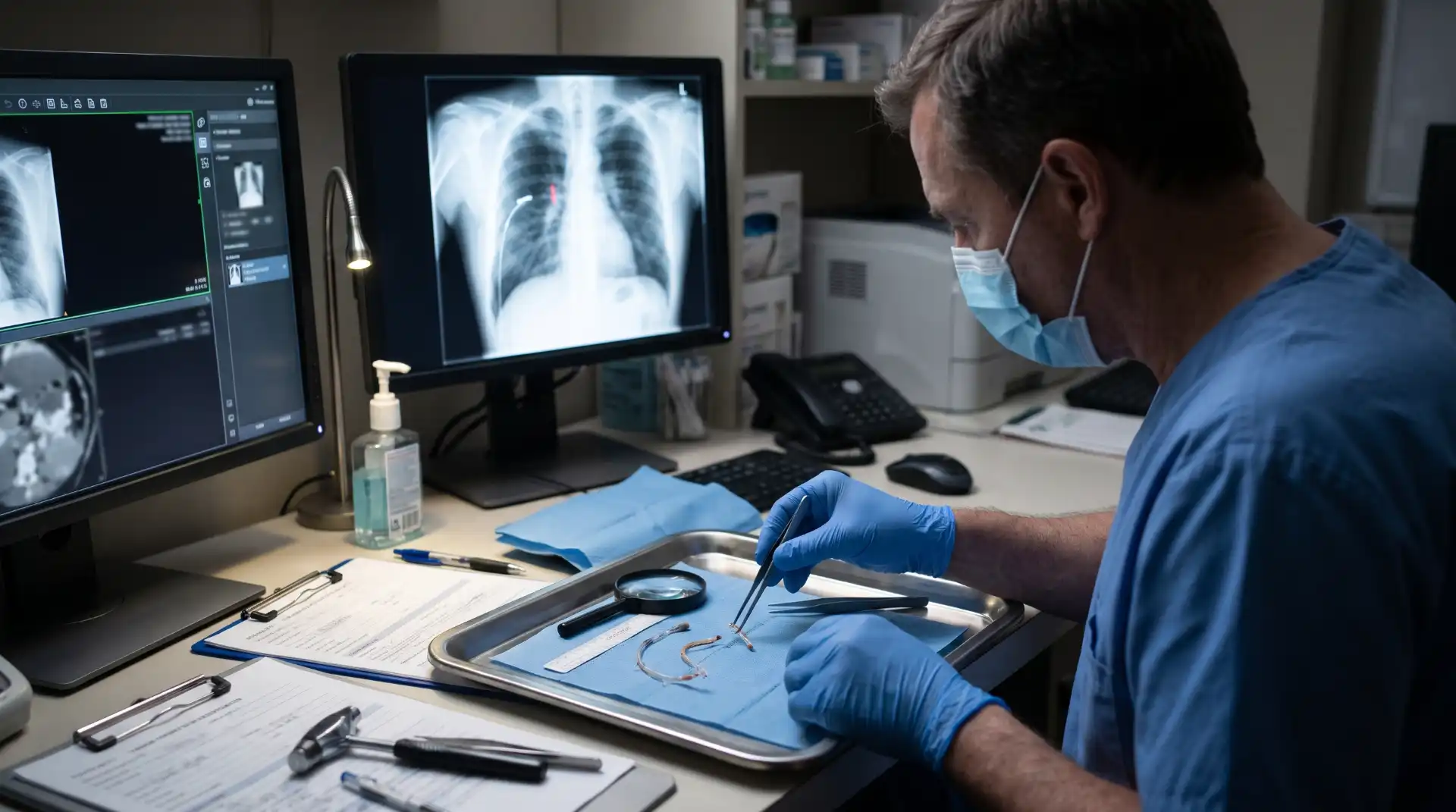
Examining the Removed Device
When a port or catheter is removed, preserving the device may be important if a product liability investigation is anticipated.
Depending on the circumstances, engineers and medical device experts may examine the product for cracks, fractures, material degradation, manufacturing irregularities, or other physical abnormalities.
Laboratory testing may help determine whether a failure is consistent with a manufacturing problem, material weakness, mechanical damage, or another cause.
The device’s condition should be documented before it is discarded, altered, or subjected to testing.
Any examination should be handled appropriately to preserve evidence and avoid compromising the device.
Investigating Alternative Causes
A thorough investigation must consider other explanations for the injury.
For example, a bloodstream infection could result from contamination during port access, inadequate maintenance, another infection source, or patient-specific risk factors.
Similarly, a catheter fracture could involve mechanical stress, improper use, placement issues, or material failure.
A reliable investigation considers the available evidence rather than assuming that the manufacturer is automatically responsible.
The Bard Implanted Port Catheter Lawsuits and MDL 3081
Bard implanted port catheter litigation has become a major medical device products liability proceeding in the United States.
In August 2023, the Judicial Panel on Multidistrict Litigation centralized federal cases involving Bard implanted port catheter products in the U.S. District Court for the District of Arizona.
The consolidated litigation is known as In re: Bard Implanted Port Catheter Products Liability Litigation, MDL No. 3081.
Multidistrict litigation, commonly called an MDL, is a federal procedure used to coordinate cases involving common factual questions.
Instead of conducting identical pretrial proceedings separately in different federal courts, related cases are transferred to one court for coordinated discovery, motions, and other proceedings.
The individual lawsuits generally remain separate cases. An MDL is not automatically a class action, and each plaintiff must establish the elements of their own claim.
The allegations in MDL 3081 include claims involving catheter fractures, infections, blood clots, material degradation, and other complications.
The litigation also raises questions about the design and manufacture of the devices, the adequacy of product warnings, testing practices, and the handling of information about potential device failures.
The official U.S. District Court for the District of Arizona Bard implanted port catheter litigation page provides access to case management orders and other court documents.
What Are Bellwether Trials?
Bellwether trials are representative cases selected to help the parties and the court evaluate how particular claims and evidence may be presented to juries.
They can provide useful information about the strengths and weaknesses of different legal theories.
However, bellwether verdicts do not automatically determine the outcome of other lawsuits.
A plaintiff who has experienced a catheter fracture, for example, may have a substantially different case from someone whose primary allegation involves an infection.
The medical evidence, causation questions, applicable law, and damages may differ considerably.
Important 2026 Bard PowerPort Litigation Developments
The litigation has experienced several significant developments during 2026.
The first bellwether trial involving Robert Cook resulted in a defense verdict on several claims, while the jury could not reach a unanimous decision on the design-defect claim.
A second bellwether trial involving Kimberly Divelbliss produced a different result.
On September 4, 2026, a federal jury awarded Divelbliss $40 million in compensatory damages after finding in her favor on design-defect and failure-to-warn claims. The case involved allegations that her implanted catheter fractured and migrated toward her heart.
The jury did not award punitive damages. The verdict was specific to that plaintiff and does not establish that other patients will receive the same amount.
A third bellwether involving May Lattanzio, whose claims concerned a bloodstream infection, resulted in a defense verdict on October 30, 2026, according to litigation reporting available as of November 5, 2026.
These different outcomes are important because they demonstrate that the litigation is not producing one uniform result across all types of injuries.
A fracture claim supported by physical evidence of a broken catheter may present different causation questions from an infection claim involving multiple possible sources of bacterial contamination.
Additional bellwether proceedings are scheduled, including a case involving alleged thrombosis beginning December 1, 2026.
The litigation remains active, and patients should not interpret one jury’s decision as a final determination of every pending claim.
Who May Be Responsible for a Bard Implanted Port Catheter Injury?
Determining legal responsibility requires identifying the cause of the injury and evaluating the conduct of the parties involved.
Several entities may have responsibilities relating to an implanted medical device.
However, the fact that multiple parties participated in the treatment process does not mean that each one is legally responsible.
Medical Device Manufacturers
Manufacturers may face product liability claims when a medical device is defective and causes injury.
Depending on the applicable state law and evidence, claims may involve defective design, manufacturing defects, or inadequate warnings and instructions.
A design defect allegation generally concerns whether the product’s design created an unreasonable risk of injury.
A manufacturing defect allegation concerns whether a particular product departed from its intended specifications or manufacturing requirements.
A failure-to-warn claim concerns whether the manufacturer provided adequate information about foreseeable risks and appropriate use.
In the Bard litigation, plaintiffs have raised several of these theories.
The manufacturer may dispute the allegations, and liability must be established through the applicable legal standards.
Hospitals and Medical Facilities
Hospitals and other medical facilities may have responsibilities involving device selection, implantation procedures, infection prevention, staff training, and patient monitoring.
A hospital may face a separate negligence claim if an employee fails to follow appropriate procedures and that failure causes an injury.
For example, improper catheter placement, inadequate sterile technique, or failure to recognize an obvious complication could potentially support a medical negligence claim.
However, an injury involving a Bard product does not automatically mean that the hospital committed malpractice.
The product liability and medical malpractice issues must be evaluated separately.
Physicians and Other Healthcare Professionals
Physicians and other qualified healthcare professionals have responsibilities when selecting, implanting, accessing, and monitoring vascular access devices.
Potential negligence issues may include failure to follow applicable insertion procedures, inappropriate device use, failure to investigate warning signs, or delayed treatment of a serious complication.
A patient who develops an infection may need an investigation into both the device and the medical procedures surrounding its use.
Determining whether a healthcare professional departed from the applicable standard of care generally requires medical expert analysis.
Distributors and Other Commercial Parties
Depending on the circumstances and applicable state law, distributors, sellers, or other entities in the product’s commercial chain may also be relevant to a product liability claim.
Their potential responsibility depends on their role, the nature of the alleged defect, and the legal rules governing the case.
Product Liability Claims Involving Bard Implanted Ports
Product liability law allows injured consumers to pursue compensation when a defective product causes legally recognized harm.
In the United States, product liability rules vary among states, although many jurisdictions recognize claims involving defective design, manufacturing defects, and inadequate warnings.
The Bard implanted port catheter litigation illustrates how these legal theories may apply to complex medical devices.
Defective Design Claims
A defective design claim focuses on whether the product was unreasonably dangerous because of the way it was designed.
Plaintiffs may argue that alternative designs or materials could have reduced the risk of catheter degradation, fracture, or other complications.
The legal test differs among states.
Some jurisdictions use risk-utility analysis, while others consider consumer expectations or statutory product liability standards.
The plaintiff may need expert testimony addressing engineering principles, material performance, alternative designs, and the relationship between the alleged design problem and the injury.
Manufacturing Defect Claims
A manufacturing defect occurs when a particular product differs from its intended design or specifications.
For example, a device may contain a material irregularity, improper component, contamination, or structural weakness resulting from manufacturing processes.
Evidence may include inspection records, batch information, manufacturing documentation, laboratory findings, and the physical condition of the removed device.
Not every catheter fracture proves a manufacturing defect. The investigation must establish whether the particular product departed from appropriate specifications and whether that departure caused the injury.
Failure-to-Warn Claims
Manufacturers may have a legal obligation to provide appropriate warnings and instructions concerning foreseeable product risks.
Inadequate warnings can become a significant issue when patients or healthcare professionals claim they were not adequately informed about risks associated with a device.
In a Bard implanted port case, a failure-to-warn investigation may examine the product’s instructions for use, labeling, warnings about mechanical complications, and information available to medical professionals.
The applicable legal standard depends on state law and may involve questions about whether adequate warnings would have changed medical decisions or prevented the injury.

What Evidence May Be Important in a Bard Port Catheter Claim?
Medical device litigation often requires extensive documentation because the injured patient must establish a connection between the product and the resulting harm.
Patients who suspect that an implanted port caused a serious complication should consider keeping copies of relevant records.
Important evidence may include:
Device identification information: Patients should try to obtain the manufacturer’s name, model, product reference number, lot number, and available implant documentation. The exact product matters because different Bard devices may have different designs and intended uses.
Implantation records: Surgical and procedural reports can help establish when and where the device was implanted and how it was positioned.
Medical imaging: X-rays, CT scans, ultrasound examinations, and other diagnostic images may help document catheter fracture, migration, thrombosis, or other complications.
Hospital and treatment records: Emergency room records, hospitalization documents, laboratory findings, physician notes, and treatment summaries may help establish the nature and severity of the injury.
Removal and retrieval records: If the device or a catheter fragment was removed, the medical records should document the procedure and the condition of the recovered material.
Photographs: Photographs of visible swelling, redness, skin damage, or other external symptoms may help document the progression of an injury.
Financial records: Medical bills, prescription costs, rehabilitation expenses, and employment records may help establish the financial impact of the complication.
Patients should not attempt to remove an implanted device or preserve a medical specimen themselves. Device handling should be coordinated with the treating medical team and, where appropriate, legal counsel.
What Compensation May Be Available After a Bard Catheter Injury?
A patient who establishes a valid product liability claim may be able to pursue compensation for several categories of damages.
The amount depends on the nature of the injury, the applicable state law, the evidence, and the long-term consequences.
Medical Expenses
Medical expenses may include emergency treatment, diagnostic testing, hospitalization, medication, surgery, catheter removal, fragment retrieval, and rehabilitation.
Patients who require additional treatment because of a device complication may face significant expenses beyond those associated with their original medical condition.
Future medical costs may also be relevant when an injury requires ongoing monitoring or treatment.
Lost Income and Reduced Earning Capacity
A serious catheter complication may interrupt a patient’s employment.
Hospitalization, additional procedures, and extended recovery periods can prevent individuals from returning to work.
Some patients may experience permanent limitations that affect their ability to perform their previous jobs.
Depending on the applicable law and evidence, compensation may include past lost income and future loss of earning capacity.
Pain and Suffering
A defective medical device injury may cause significant physical discomfort.
Patients may experience pain from catheter removal, additional procedures, infection, blood clots, or vascular injuries.
Compensation for pain and suffering may be available under applicable state law when the legal requirements are satisfied.
Emotional Distress
Unexpected medical complications can also create emotional difficulties.
Patients may experience anxiety, fear, depression, sleep disturbances, or distress associated with additional procedures and prolonged hospitalization.
These consequences may be considered when evaluating non-economic damages.
Long-Term Disability and Loss of Quality of Life
Some complications may create lasting medical limitations.
For example, a patient who experiences a serious cardiac or vascular injury may require additional monitoring or experience restrictions affecting everyday activities.
The long-term impact of an injury may be relevant when determining the value of a claim.
Punitive Damages
In certain jurisdictions, punitive damages may be available when a defendant’s conduct meets a demanding legal standard involving particularly serious misconduct.
They are not awarded automatically in product liability cases.
The evidence must satisfy the applicable state’s requirements, and the court may impose additional restrictions on whether such damages can be considered.
The $40 million Divelbliss verdict did not include punitive damages, illustrating the distinction between compensatory and punitive awards.
How Patients Can Protect Their Rights After a Suspected Device Failure
Patients dealing with an implanted port complication should prioritize their health while also taking reasonable steps to preserve relevant information.
The first step is to obtain medical attention. A suspected catheter fracture, infection, blood clot, or other complication should be evaluated by qualified healthcare professionals.
Patients should explain their symptoms, identify the implanted device if possible, and provide information about previous treatments or procedures.
They should also ask their medical team for copies of relevant records, including implantation documentation, imaging reports, and any records associated with device removal or repair.
If the removed device is potentially relevant to an investigation, patients can ask the hospital about its preservation and handling procedures.
It is also useful to maintain a written timeline describing when symptoms began, which healthcare providers were contacted, and what treatments were performed.
Patients should avoid making assumptions about the cause of an injury before the available medical evidence has been reviewed.
A product liability attorney familiar with defective medical devices may help determine whether further investigation is appropriate.
Readers seeking a broader explanation of injury-related legal procedures can also review Accidental Wiki’s guide to navigating the legal process after an injury.
Statutes of Limitations and Filing Deadlines
One of the most important considerations in a potential Bard implanted port catheter claim is the statute of limitations.
A statute of limitations establishes the period during which a lawsuit must generally be filed.
These deadlines differ among states and may depend on the type of legal claim, the date of injury, when the injury was discovered, and other circumstances.
Some states apply discovery rules that may affect when the filing period begins. Other states have additional restrictions, including statutes of repose, that can limit claims after a specified period.
Medical device cases can involve complicated timing questions because an implanted port may remain inside a patient’s body for years before a serious complication is identified.
For example, a patient may have received an implanted port in 2014 but not discovered a catheter fracture until 2025.
Whether the claim remains legally available depends on the applicable state’s laws and the specific facts.
The existence of MDL 3081 does not eliminate the need to comply with individual filing deadlines.
Patients should not assume that joining an online discussion, contacting a law firm, or waiting for a potential settlement automatically protects their legal rights.
An attorney can review the relevant dates and determine which deadlines may apply.
The Role of the FDA in Medical Device Safety
The U.S. Food and Drug Administration plays an important role in monitoring medical devices and addressing safety concerns.
The FDA regulates medical devices and receives reports involving suspected product malfunctions, injuries, and deaths.
These reports can help identify potential safety patterns and may contribute to investigations, regulatory actions, recalls, or changes to product instructions.
However, adverse event reports have important limitations.
A report does not automatically establish that a device caused the reported injury. Reports may contain incomplete information, and the FDA does not independently verify every reported event.
Patients and healthcare professionals can use the FDA’s official medical device reporting and problem-reporting resources to learn how suspected device problems can be reported.
The FDA also maintains a medical device recalls and early alerts database that provides information about certain safety actions involving medical products.
Patients should verify the exact device name, model, product number, and lot information before assuming that a recall or safety communication applies to their implant.
The existence of a lawsuit does not necessarily mean that the FDA has recalled every product involved in that litigation.
Medical Malpractice Versus Medical Device Product Liability
Patients sometimes confuse medical malpractice claims with defective medical device lawsuits.
Although the two areas can overlap, they involve different legal questions.
A medical malpractice claim generally concerns whether a healthcare professional or medical facility failed to meet the applicable standard of care.
A product liability claim concerns whether a product was defective or inadequately accompanied by warnings and whether that defect caused an injury.
Consider a patient who receives an implanted port that later fractures.
If the fracture resulted from an alleged structural defect in the catheter, the manufacturer may become the focus of a product liability investigation.
However, if a separate investigation identifies improper placement or inappropriate handling by a healthcare professional, medical negligence issues may also arise.
In some cases, both types of claims may be considered.
For a broader introduction to these legal concepts, readers can explore Accidental Wiki’s article on personal injury law and how it relates to accidents.
Understanding the distinction can help patients identify the appropriate parties and legal theories for further investigation.
How Insurance May Affect Treatment and Injury Claims
Medical device complications can create substantial financial pressure.
Patients may need additional imaging, hospital care, medication, rehabilitation, or surgery.
Health insurance may cover some medically necessary treatment, depending on the policy and the circumstances.
However, patients may still face deductibles, copayments, coverage disputes, and other out-of-pocket expenses.
If a patient pursues a successful legal claim, questions may also arise concerning reimbursement rights, medical liens, and payments made by health insurance plans.
The treatment and legal claims should be handled carefully to avoid confusion between medical coverage and potential compensation from a manufacturer or another responsible party.
Patients who want to understand how insurance operates in injury situations can also read Accidental Wiki’s guide to the role of insurance in accidental injury claims.
Keeping accurate financial records can help patients understand the full economic impact of a device-related complication.
What Patients Should Know About Bard PowerPort Settlements
Patients researching Bard implanted port catheter litigation may encounter websites discussing possible settlement amounts.
It is important to distinguish between an individual jury verdict, an individual settlement, and a global settlement program.
The $40 million Divelbliss verdict was a jury award in an individual case. It was not a guaranteed payment available to every person who received a Bard implanted port.
Different patients may have substantially different medical histories and injury circumstances.
For example, a patient whose catheter fractured and migrated into the heart may present different evidence from a patient whose primary allegation involves a bloodstream infection.
Other important considerations include the type of device, the severity of the injury, the need for additional surgery, the available medical evidence, and the applicable legal requirements.
As of November 5, 2026, the Bard implanted port catheter litigation remains active. The different bellwether results should not be treated as proof that a global settlement has been reached or that every pending plaintiff will receive compensation.
Patients should be cautious about websites advertising guaranteed settlement amounts or suggesting that a specific payment is available without an established settlement agreement.
A qualified attorney can explain the status of the litigation and evaluate whether an individual claim may be appropriate.
Preventing Additional Complications With Implanted Port Catheters
Although patients cannot control every risk associated with implanted medical devices, appropriate medical care and communication can help reduce preventable complications.
Patients should follow their healthcare team’s instructions regarding port access, flushing, maintenance, and monitoring.
Only appropriately trained medical professionals should access or manage an implanted port.
Patients should also communicate promptly when they experience pain, swelling, fever, unusual resistance during access, or other unexpected changes.
Medical professionals should follow appropriate infection-prevention practices and verify that the device is suitable for the intended procedure.
Before a power-injection procedure, healthcare professionals should confirm that the specific port and catheter are approved for the intended injection conditions.
Patients should not assume that all implanted ports have identical capabilities.
Regular communication with the treating medical team is particularly important for individuals undergoing chemotherapy or other treatments that may affect immune function.
If a patient is concerned about a specific Bard device, the medical team can review its identification information and determine whether additional evaluation is appropriate.
Conclusion: Understanding Your Rights After a Bard Implanted Port Catheter Injury
Implanted vascular access ports provide important benefits for patients who require repeated intravenous treatment. However, when these devices malfunction or cause serious complications, the consequences can extend far beyond the original medical problem.
Bard implanted port catheter litigation has brought attention to allegations involving catheter fracture, migration, material degradation, infections, blood clots, and other injuries.
The ongoing federal proceedings demonstrate that medical device liability