
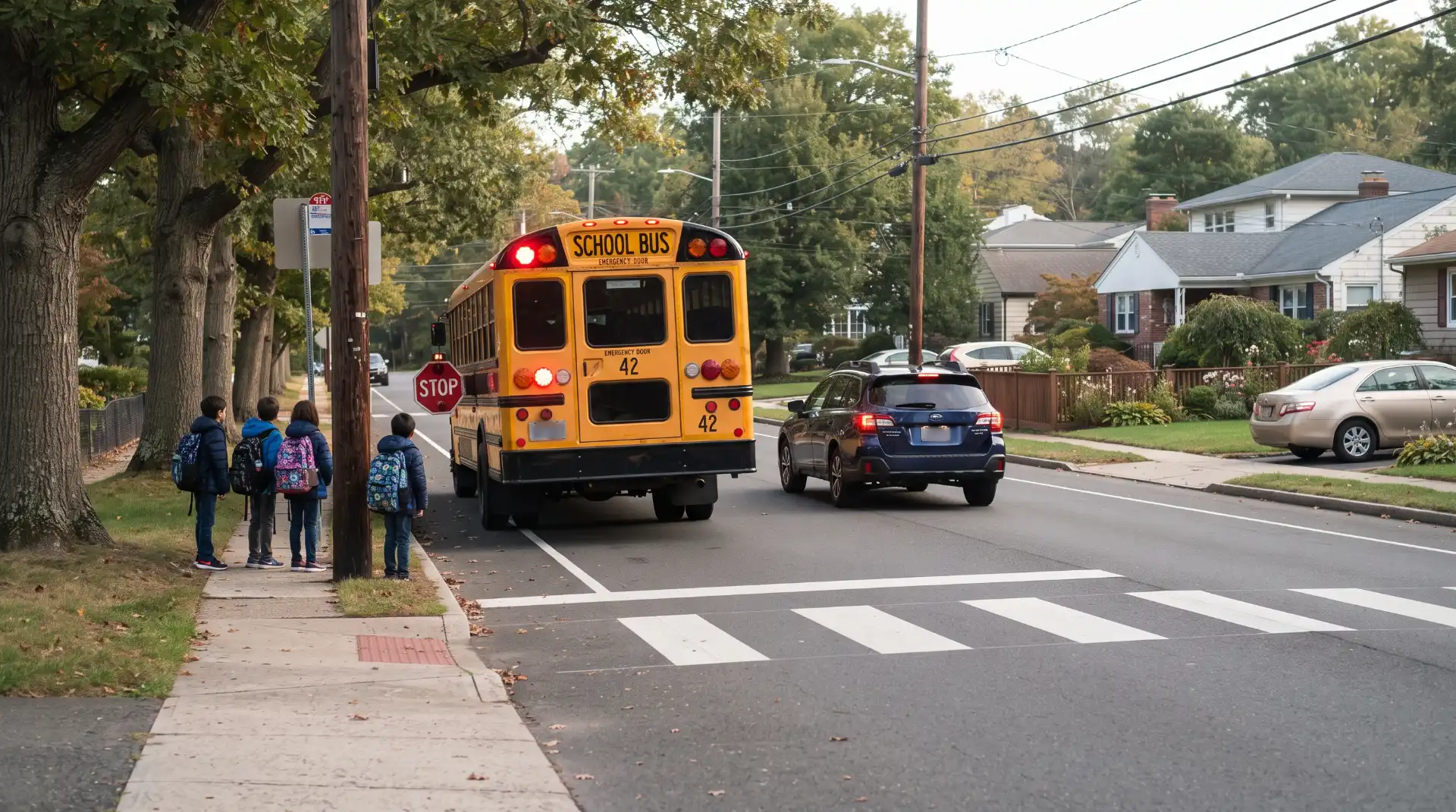
Few traffic situations demand more caution from motorists than approaching a stopped school bus. When a school bus activates its red warning lights and extends its stop arm, children may be entering the roadway to board the bus or crossing the street after getting off. A driver who ignores those warnings can place a child or another pedestrian directly in the path of a moving vehicle.
School bus stop-arm accidents can result in catastrophic injuries, complicated insurance claims, traffic citations, and civil lawsuits. When the person who is struck is a child, additional legal and procedural issues may arise because minors generally cannot handle injury settlements in the same manner as adults.
Although school buses themselves are considered one of the safest forms of transportation for students, the area immediately surrounding a stopped bus presents a different type of danger. The National Highway Traffic Safety Administration explains that children are particularly vulnerable when approaching or leaving a school bus because they are pedestrians during that part of their journey.
This guide explains how school bus stop-arm accidents happen in the United States, what drivers are generally required to do, who may be responsible when a child or pedestrian is struck, what evidence can matter, and how an injury claim may proceed.
What Is a School Bus Stop Arm?
A school bus stop arm is the red, octagonal STOP sign that extends from the driver’s side of a school bus when the bus stops to pick up or discharge students. It works together with flashing warning lights to alert surrounding motorists that children may be entering or crossing the roadway.
Typically, flashing yellow lights warn drivers that the bus is preparing to stop. Motorists should slow down, increase their attention, and prepare to stop. Once the bus has stopped, flashing red lights and an extended stop arm indicate that students are boarding or leaving the bus.
The National Highway Traffic Safety Administration states that motorists should remain stopped until the red lights stop flashing, the stop arm retracts, and the school bus begins moving again.
Traffic laws are primarily established by individual states, so specific requirements may differ. Rules can be especially different on divided highways, multi-lane roads, and roads separated by medians or barriers. Drivers should therefore understand the school bus laws in the state where they are operating a vehicle.
Why Stop-Arm Violations Are So Dangerous
The danger created by an illegal school bus pass is not limited to a technical traffic violation. A motorist may be driving directly into an area where children have been instructed that traffic should be stopped.
Young children can be particularly vulnerable because they may have difficulty estimating vehicle speed and distance. A child may also be focused on reaching the bus, greeting a parent, or walking home rather than watching for a driver who has ignored the bus’s warning system.
NHTSA has cited a national survey estimating more than 43.5 million illegal school bus passings during the 2022-2023 school year. Although most violations do not result in a collision, the potential consequences can be severe when a passing vehicle reaches the loading or unloading area at the same moment as a pedestrian.
Drivers should also remember that the visible stop arm is only part of the warning. Children can emerge from in front of the bus, enter an adjacent lane, or cross several lanes of traffic. A motorist who accelerates immediately after believing the child has cleared one lane may still create a serious hazard.
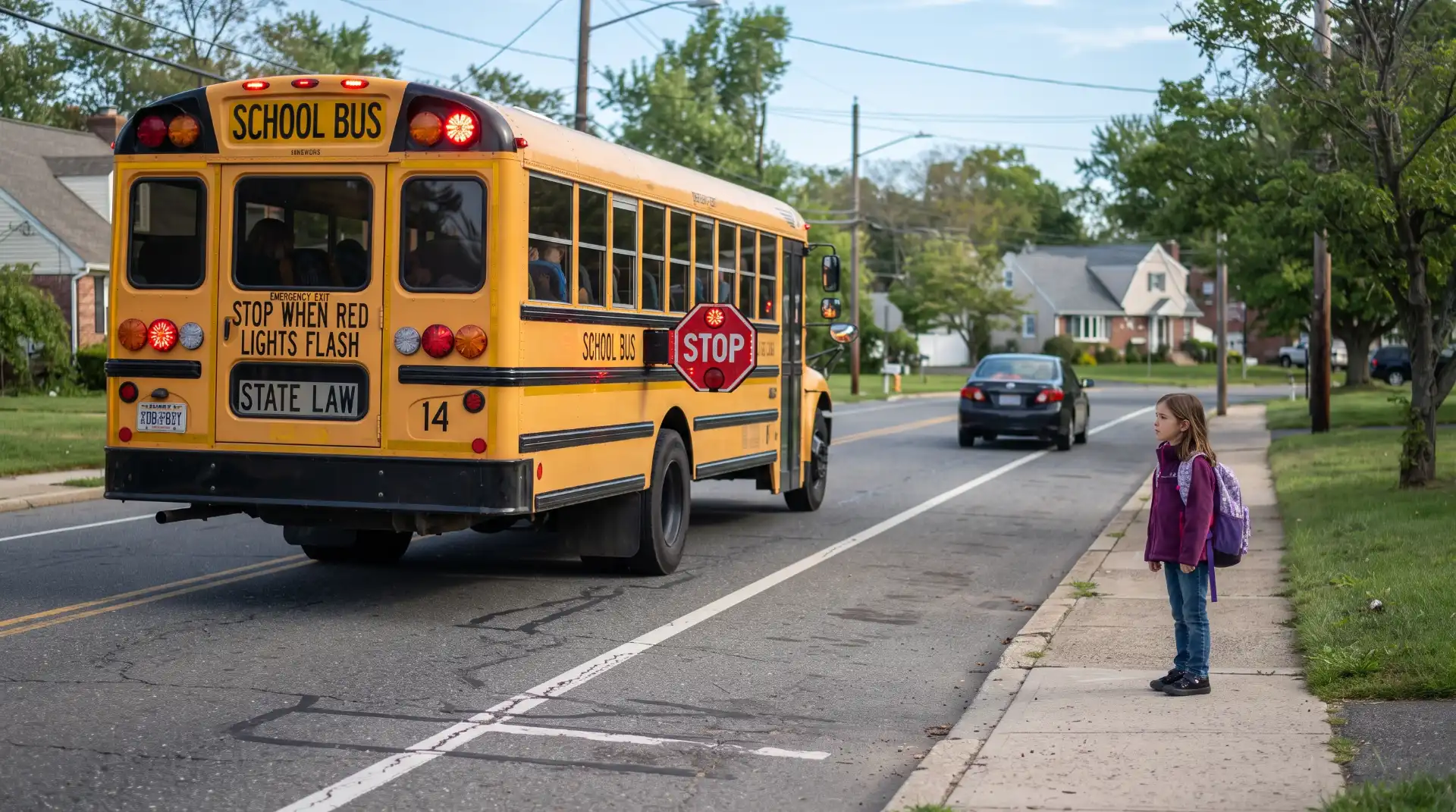
How School Bus Stop-Arm Accidents Commonly Happen
These crashes can occur in many different ways. One common scenario involves a motorist approaching a stopped bus from behind and attempting to drive around it despite the flashing red lights. Another involves an approaching driver traveling in the opposite direction who does not stop when state law requires it.
Distracted driving is another major concern. A driver looking at a cellphone, navigation display, entertainment system, passenger, or roadside distraction may fail to notice the bus slowing down until it is too late.
Speed can make the situation even more dangerous. A motorist traveling too fast for a residential street or school area may not have enough distance to react after seeing the yellow warning lights.
Visibility can also contribute. Early morning darkness, rain, glare, fog, parked vehicles, road curves, and poorly positioned bus stops can make children harder to see. These circumstances do not automatically excuse a driver, however. Motorists generally have a responsibility to adjust their speed and attention to roadway conditions.
Drivers interested in the broader role of distraction in traffic claims can also review Accidental Wiki’s Distracted Driving Accident Claims in 2026 resources.
What Happens Immediately After a Driver Hits a Child?
The first priority after any pedestrian collision is emergency medical care. Injuries involving children can be difficult to evaluate at the scene because adrenaline, fear, and shock may temporarily mask symptoms.
Emergency responders may examine the child for head trauma, fractures, internal injuries, spinal injuries, cuts, or other trauma. Depending on the severity of the collision, the child may be transported to a hospital for further testing and observation.
Law enforcement will generally investigate a serious pedestrian crash. Officers may photograph the roadway, record statements, identify witnesses, examine the vehicle, review the position of the school bus, and determine whether the driver’s conduct violated state traffic laws.
If a stop-arm violation occurred, the driver may also face a traffic citation or other consequences under state law. The exact penalties vary considerably across the United States and can become more serious when a violation causes bodily injury or death.
A Traffic Ticket and a Civil Injury Claim Are Different
Families sometimes assume that a driver’s citation automatically resolves the injury claim. The two processes are related but separate.
A traffic case involves whether the motorist violated a criminal or traffic law and what penalties should be imposed. A civil injury claim focuses on responsibility for the harm caused by the collision and the financial compensation available to the injured person.
A citation can become important evidence, but insurers and attorneys may still investigate exactly how the collision occurred. They may examine whether the stop arm was activated, where the pedestrian was walking, whether the motorist had sufficient time to stop, and whether another condition contributed to the crash.
Who May Be Liable for a School Bus Stop-Arm Accident?
In many cases, the driver who failed to stop will be the primary focus of the investigation. If the motorist ignored flashing red lights, passed an extended stop arm, drove while distracted, or traveled too fast to stop safely, those actions may support an allegation of negligence.
Liability is not always limited to one person, however.
The Motorist
A motorist may be responsible when careless driving causes the collision. Evidence showing an illegal pass, excessive speed, cellphone use, intoxication, failure to maintain a proper lookout, or another traffic violation can become important in establishing fault.
The Motorist’s Employer
If the driver was performing work duties at the time of the crash, an employer may potentially become involved. Examples could include delivery drivers, commercial drivers, maintenance workers, or employees traveling as part of their job.
Whether an employer can be held responsible depends heavily on state law and whether the driver was acting within the scope of employment.
A Vehicle Owner
Some states recognize circumstances in which a vehicle owner can face liability for allowing another person to operate the vehicle. The rules differ substantially by jurisdiction, so ownership alone does not establish responsibility in every case.
A School District or Transportation Provider
Occasionally, investigators may examine whether the school district, private bus company, or transportation contractor contributed to the dangerous situation. Questions might involve bus-stop placement, driver procedures, malfunctioning warning equipment, supervision, or compliance with required transportation practices.
Claims involving a school district or other public entity may be subject to special notice procedures and much shorter deadlines than ordinary personal injury cases. Families should not assume that the standard deadline for a private-party lawsuit applies to a government-related claim.
A Vehicle or Component Manufacturer
Less commonly, a mechanical defect may contribute to a collision. Defective brakes, steering components, warning systems, or another vehicle problem could raise a potential product liability issue. These cases typically require technical investigation and preservation of the vehicle or component involved.
How Negligence Is Evaluated
Most school bus pedestrian injury cases center on negligence. In general terms, negligence requires showing that a person owed a duty to act with reasonable care, failed to meet that duty, caused an accident, and caused actual harm.
For a driver approaching a school bus, reasonable care includes obeying applicable traffic laws and watching carefully for children.
If a motorist drove past an extended stop arm and struck a child who was crossing the road, the violation may provide strong evidence of unreasonable conduct. The specific legal effect of the traffic violation, however, depends on state law.
Investigators may also consider how much time the driver had to respond, road conditions, sight distance, speed, traffic layout, and whether the red warning lights were clearly operating.
Does a Child’s Conduct Affect the Claim?
Defendants and insurance companies sometimes argue that a pedestrian suddenly entered the road or failed to look for traffic. When the pedestrian is a child, however, the analysis may be different from the standard applied to an adult.
Many states consider a child’s age, maturity, and ability to recognize danger when evaluating comparative or contributory negligence. Some jurisdictions also have special legal rules concerning very young children.
This is one reason families should be cautious about accepting an insurer’s early statement that a child was partially responsible. Fault involving a minor can depend on state-specific law and the precise circumstances surrounding the collision.
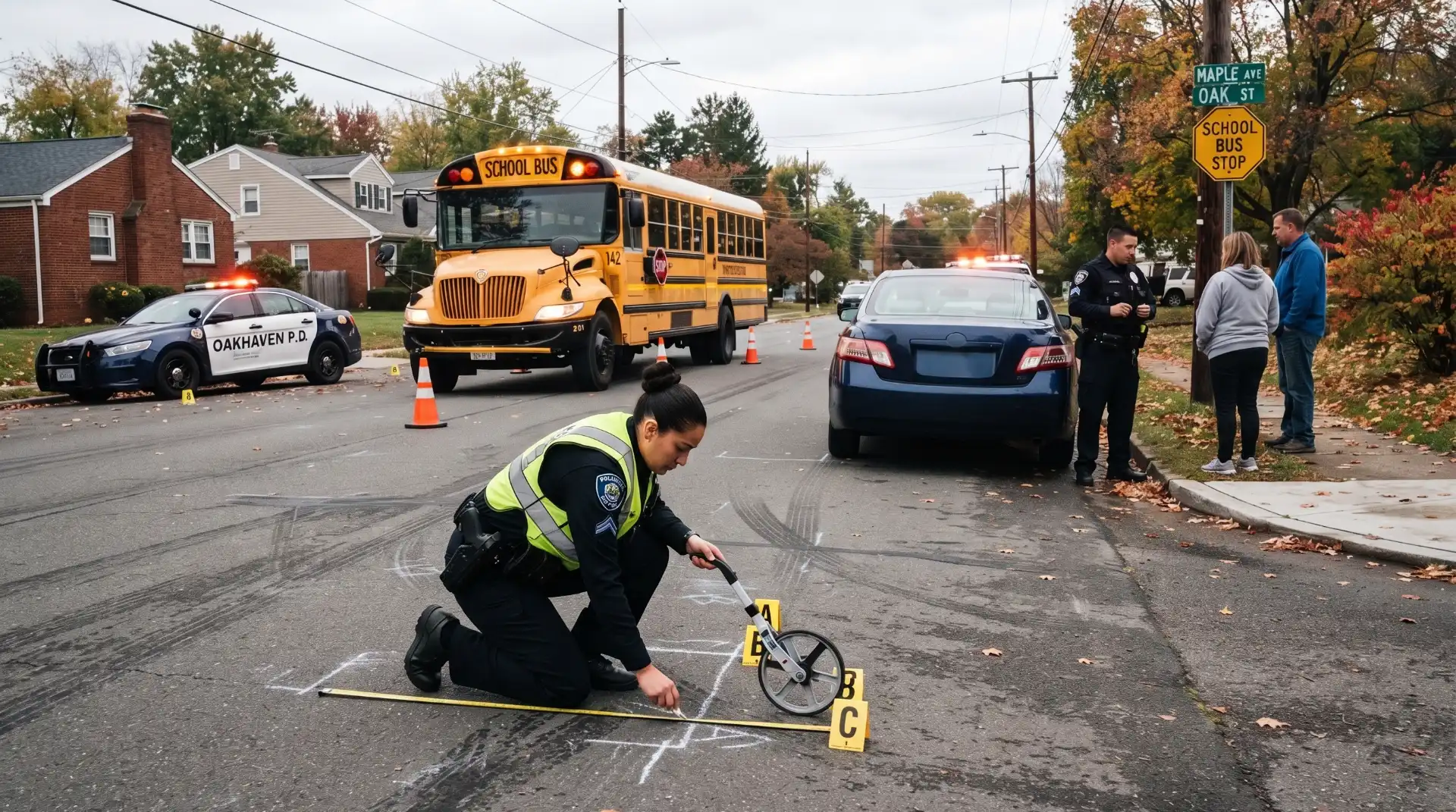
What Evidence Matters After a Stop-Arm Crash?
Evidence can disappear quickly after a roadway accident. Vehicles are repaired, surveillance recordings are erased, physical markings fade, and witnesses become harder to locate.
A police crash report is usually one important source of information. It may identify the driver, vehicle, insurance carrier, witnesses, road conditions, citations, and preliminary observations.
The school bus itself may also contain important evidence. Modern buses may have exterior cameras, interior cameras, stop-arm cameras, GPS information, routing records, or electronic data. Whether those records exist and how long they are retained depends on the transportation provider.
Nearby homes, businesses, traffic cameras, and doorbell cameras may also capture the incident. A video showing the red lights, extended stop arm, pedestrian movement, and passing vehicle can be especially valuable.
Witnesses can provide additional context. A parent waiting at the bus stop, another student, the school bus driver, another motorist, or a nearby resident may have seen the collision or the moments immediately before it.
Accidental Wiki’s guide on the role of eyewitnesses in accident claims provides additional information about why independent witness accounts can become important in disputed accident cases.
Medical Evidence Is Equally Important
A serious collision can produce injuries that require months or years of treatment. Medical documentation establishes not only the diagnosis but also the progression of recovery.
Records may include emergency room reports, diagnostic imaging, surgical records, specialist evaluations, physical therapy notes, prescriptions, rehabilitation plans, and future-care recommendations.
For children, medical evidence may also need to address how an injury could affect future growth and development. For example, a fracture involving a growth plate may require a different long-term evaluation than a similar fracture in an adult.
Traumatic brain injuries can also affect concentration, memory, emotional regulation, academic performance, sleep, or behavior. In significant cases, school records and evaluations may help document changes following the accident.
Potential Injuries in School Bus Pedestrian Accidents
Pedestrians have little physical protection when hit by a motor vehicle. Even a relatively low-speed collision can cause severe trauma, particularly when the victim is a small child.
Possible injuries include broken bones, head injuries, traumatic brain injuries, spinal injuries, internal organ damage, lacerations, road rash, dental injuries, nerve damage, and psychological trauma.
Some children may also experience anxiety about crossing streets, riding the school bus, returning to school, or being near traffic after the collision. When appropriately diagnosed and treated, emotional and psychological effects may form part of the overall injury documentation.
What Compensation May Be Available?
The damages available after a school bus stop-arm accident depend on state law and the facts of the case. A claim may seek reimbursement for past medical bills and compensation for reasonably anticipated future medical treatment.
Other damages may include rehabilitation expenses, assistive equipment, counseling, pain and suffering, emotional distress, disability, disfigurement, and reduced quality of life.
If a parent must miss work to care for an injured child, some jurisdictions may permit recovery of certain related economic losses. The exact rules vary.
When an accident causes a fatal injury, surviving family members may have potential wrongful death claims. The people allowed to bring those claims, recoverable damages, and filing deadlines differ from state to state.
How Insurance Claims Usually Begin
When the responsible driver has automobile insurance, the insurer will typically investigate the accident after receiving notice of the claim.
An adjuster may request the police report, medical records, photographs, witness information, and statements about how the collision occurred.
Families should understand that the liability insurer represents the interests of its insured and the insurance company. An adjuster may investigate whether the damages can be reduced, whether another party shares responsibility, or whether a particular medical expense was related to the accident.
A recorded statement can therefore require caution, particularly when the injured person is a minor or the accident involves disputed facts.
What If the Driver Has Little or No Insurance?
A serious child pedestrian injury can create medical costs far beyond the liability limit of a basic automobile policy.
If the motorist is uninsured or underinsured, additional sources of coverage may need to be investigated. Depending on state law and the policies involved, uninsured or underinsured motorist coverage available through a household auto policy may potentially become relevant.
Other potentially responsible parties should also be investigated rather than assuming the driver’s insurance is the only possible source of recovery.
Special Issues When the Injured Person Is a Minor
Personal injury claims involving children often involve additional safeguards. A parent or legal guardian may usually act on behalf of the child, but major settlement decisions may require court approval in some states.
Courts may also require settlement funds belonging to a minor to be placed into a restricted account, trust, structured settlement, or another protected arrangement until the child reaches a specified age.
Statutes of limitation can also operate differently when the injured person is a minor. Some deadlines may be extended, while others may not be, particularly when public entities or special statutory claims are involved.
Because these rules are highly state-specific, families should not rely on a general assumption that they can simply wait until the child becomes an adult before taking action.
What Parents Should Do After a School Bus Pedestrian Accident
After obtaining emergency medical care, parents should preserve as much information as possible. Photographs of the roadway, school bus, vehicle, stop arm, traffic signs, child injuries, clothing, and damaged personal belongings can all help establish what happened.
The family’s records should include medical bills, appointment summaries, prescriptions, transportation expenses, school absences, communications with the school district, and insurance correspondence.
Parents should also identify the school bus operator and transportation provider. Written requests may be necessary to preserve camera footage or electronic records before routine retention systems overwrite them.
Posting detailed information about the accident on social media should generally be approached cautiously. Statements, photographs, location information, or descriptions of the child’s activities could later be reviewed by an insurer or opposing party.
Why School Bus Camera Footage Can Be Crucial
Many school districts and transportation companies now use cameras designed to monitor student behavior, document bus operations, or identify drivers who illegally pass an extended stop arm.
Video may show when the warning lights activated, when the stop arm extended, where the child was standing, how fast the vehicle appeared to be traveling, and whether the driver attempted to brake.
Stop-arm camera programs vary by state and locality. Some jurisdictions authorize automated enforcement, while others use footage primarily for investigation or safety purposes.
Because retention periods can be short, obtaining and preserving relevant recordings can become one of the most time-sensitive parts of an investigation.
What About the Location of the Bus Stop?
The design and location of a bus stop can affect pedestrian risk. NHTSA guidance encourages transportation planners to consider road width, vehicle speed, sight distance, pedestrian paths, and whether children must cross multiple lanes.
A stop requiring young students to cross a wide, high-speed roadway may create more exposure than one allowing students to board from the same side of the road.
That does not mean every difficult bus-stop location creates legal liability. Decisions involving school transportation routes can be governed by state statutes, local rules, governmental immunity provisions, and administrative policies.
However, when investigators believe an unsafe stop design contributed to a serious crash, the planning and operation of the route may become part of the broader investigation.
How Drivers Can Prevent Stop-Arm Accidents
The most important rule is straightforward: motorists should expect children whenever a school bus is slowing or stopped.
Yellow flashing lights should be treated as an advance warning rather than an invitation to accelerate around the bus. Drivers should slow down and prepare for the red lights and stop arm to activate.
Once the bus is stopped and the applicable law requires traffic to stop, motorists should remain stationary until it is legally safe to proceed.
Drivers should also scan the entire roadway, not just the door of the bus. A child may be approaching from a driveway, crossing from the opposite side, walking in front of the bus, or retrieving a dropped item.
Using a phone, programming navigation, eating, or engaging in another distracting activity near a school bus dramatically reduces the margin for error.
How Parents Can Teach Safer Bus-Stop Habits
Children should understand that the stop arm does not physically prevent a vehicle from passing. Even when traffic is legally required to stop, students should still look for moving vehicles before crossing.
NHTSA recommends that children wait at least 10 feet away from the curb and wait until the school bus has completely stopped before approaching it. When crossing in front of the bus, children should move far enough ahead that the bus driver can see them and should make eye contact with the driver before crossing.
Children should never walk behind a school bus where the driver may have difficulty seeing them.
These habits cannot eliminate every risk, but they can create an additional layer of protection when another motorist makes a dangerous mistake.
Federal Guidance and State Stop-Arm Laws
School bus construction and safety equipment are influenced by federal motor vehicle standards, while stopping requirements for surrounding motorists are largely governed by state law.
For current national safety guidance, drivers and parents can review the National Highway Traffic Safety Administration’s School Bus Safety resources.
NHTSA explains that flashing yellow lights indicate a school bus is preparing to stop, while flashing red lights and an extended stop arm indicate that students are getting on or off the bus. It also emphasizes that drivers should remain stopped until the warning system is deactivated and the bus begins moving.
Specific exceptions can differ between states, particularly for traffic traveling in the opposite direction on divided highways. Drivers should consult the current motor vehicle laws in their state rather than relying on rules remembered from another jurisdiction.
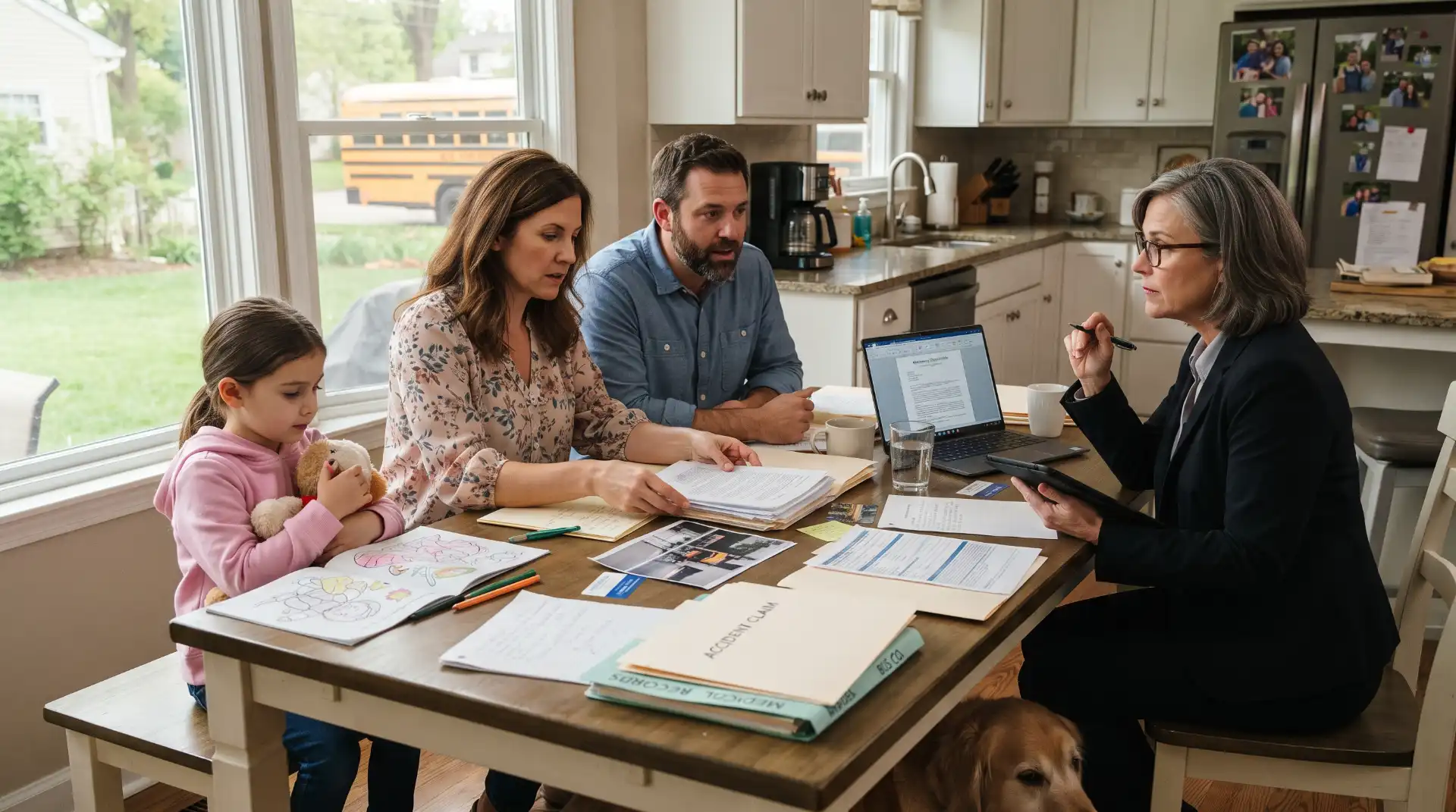
When Should a Family Consider Legal Advice?
A minor bump or near miss may not result in a legal claim. A serious pedestrian collision is different, particularly when hospitalization, surgery, brain injury, permanent impairment, or substantial medical expenses are involved.
Legal guidance may be useful when fault is disputed, multiple parties may be responsible, a government entity is involved, insurance limits are unclear, evidence is at risk of being destroyed, or the child may need significant future medical care.
A lawyer handling a serious child injury claim may investigate available insurance, request video footage, obtain transportation records, interview witnesses, evaluate applicable traffic laws, coordinate with medical professionals, and identify deadlines that could affect the case.
Frequently Asked Questions About School Bus Stop-Arm Accidents
Is it always illegal to pass a school bus with its red lights flashing?
Motorists traveling behind a stopped school bus generally must stop when its red lights are flashing and its stop arm is extended. Rules for vehicles approaching from the opposite direction can vary when the road has a median, physical barrier, or multiple lanes. Drivers should follow the law of the state where they are traveling.
Can a stop-arm violation be used as evidence in an injury claim?
Yes. A traffic violation may be important evidence of negligence, although its exact legal effect depends on state law and the facts of the case.
Can school bus video be obtained after an accident?
Possibly. Many buses use cameras, but availability, ownership, retention schedules, and disclosure rules vary. Acting promptly can be important because video may eventually be overwritten.
Can a school district be sued?
Potentially, depending on the circumstances and state law. Claims against public schools or government transportation agencies may be subject to governmental immunity rules and special notice deadlines.
What happens if the injured pedestrian is a child?
A parent or guardian may generally pursue the claim on the child’s behalf. Settlement procedures, court approval requirements, and statutes of limitation may differ from those applying to adult injury claims.
The Bottom Line
A school bus stop arm is designed to create a protected loading and unloading zone for children, but its effectiveness ultimately depends on surrounding motorists obeying the warning.
When a driver passes a stopped school bus and strikes a child or pedestrian, the resulting case can involve far more than a traffic citation. Investigators may need to examine negligence, insurance coverage, school bus video, witness accounts, medical evidence, transportation policies, and potentially the actions of several parties.
For families, immediate medical treatment and preservation of evidence should come first. Police reports, photographs, camera recordings, witness information, and complete medical documentation can help establish what occurred and how the injury affected the child.
Because school bus traffic laws, liability standards, government-claim procedures, and filing deadlines differ throughout the United States, anyone dealing with a serious stop-arm collision should review the laws that apply in the state where the accident occurred.