
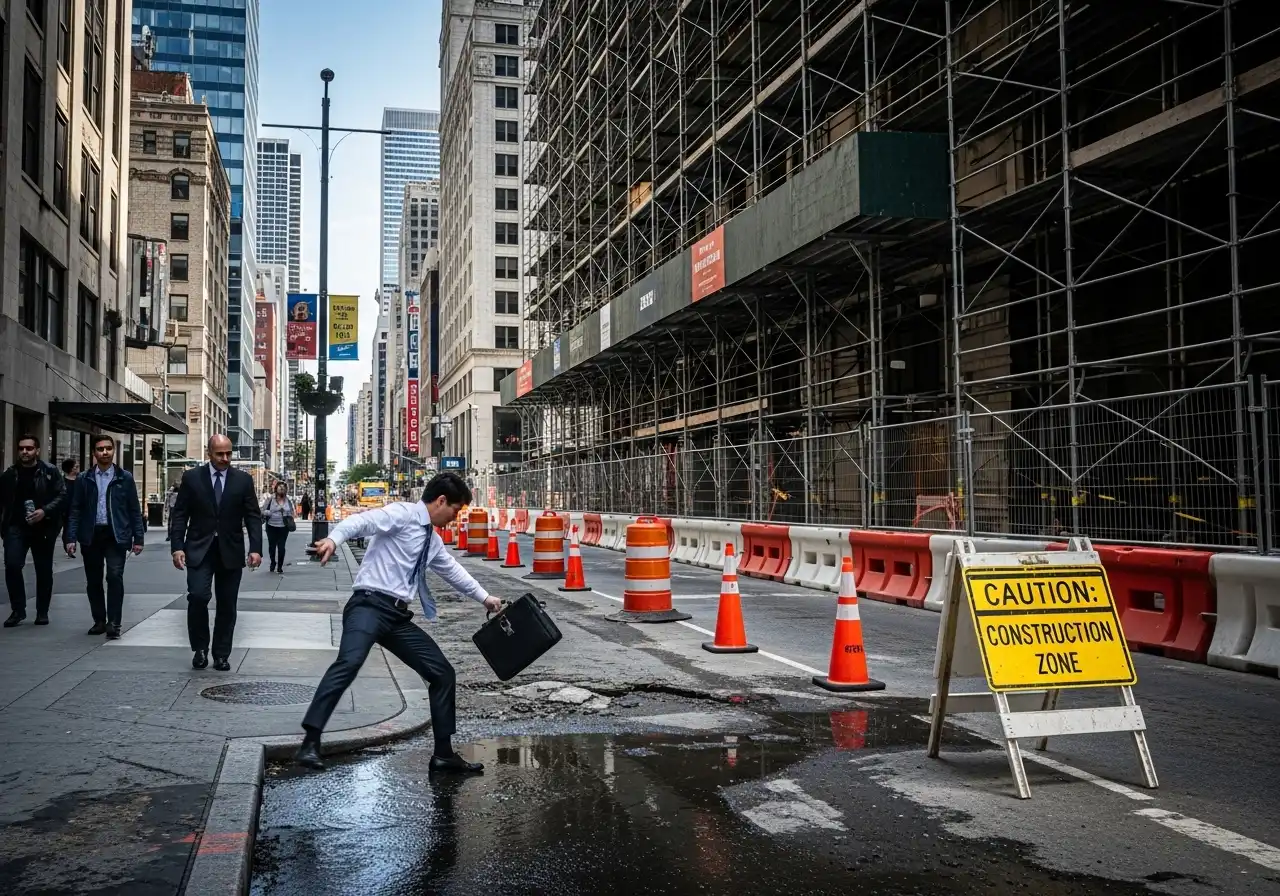
The rapid pace of urban construction offers progress and renewal — but also increased risk of injury for both workers and the public. When construction projects are underway in city spaces, sidewalks, walkways, public access routes and adjacent properties often become hazardous. In this blog, we’ll explore what you must know about slip and fall claims in the context of urban construction: how these incidents occur, who may be liable, how to document your case, and how to protect your rights.
1. The Urban Construction Boom & Why Slip & Fall Risks Are Rising
In many metropolitan areas, construction is booming: new residential towers, mixed-use developments, infrastructure upgrades and more. With that surge of activity comes more open excavations, temporary walkways, uneven surfaces, construction debris, changing pedestrian routes and heavy equipment navigating public zones.
According to the U.S. Bureau of Labor Statistics (BLS), in the construction industry nearly one in five workplace deaths occurs in that sector, and about 38.4 % of those fatal falls, slips or trips happened in construction. Additionally, non-fatal injury rates due to falls, slips and trips in construction remain significantly higher than average.
For pedestrians, visitors, delivery workers or site contractors, the risks are real: uneven sidewalks, debris from overhead work, temporary walkways, wet surfaces from site operations, or poorly-marked pedestrian detours. These conditions create a ripe environment for slip/trip/fall events—and thus, legal claims.
2. What Exactly Is a “Slip & Fall” in the Construction Context?
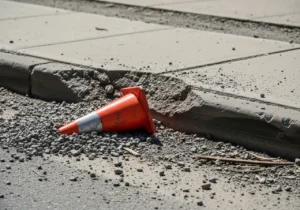
A “slip & fall” typically involves a person losing footing due to a hazardous surface condition (slip) or tripping because of a grade change, obstruction or defect (trip), resulting in injury. In the context of construction, the hazard may stem from incomplete pavement, loose gravel, temporary flooring, debris, exposed conduits, raised slabs, or poorly-maintained site walkways.
When such an incident happens on or adjacent to a construction site, the legal classification may fall under premises liability, or even third-party personal injury depending on the jurisdiction and parties involved. For a detailed exploration of slip & fall fundamentals, see this guide by Nolo.
3. Who May Be Liable in an Urban Construction Slip & Fall?
Determining liability in an urban construction slip/trip/fall incident can be more complicated than a typical store-floor case. Potentially responsible parties include:
- The property or site owner (who may owe a duty of care to pedestrians or invitees).
- The general contractor or construction management firm (responsible for site safety, signage, walkways, debris control).
- Subcontractors performing specific work (who may create hazards or fail to implement safety measures).
- Adjacent property owners or municipalities (for example, if sidewalk maintenance falls under local government responsibility).
- Equipment or material suppliers (if defective scaffolding or temporary flooring contributed to the fall).
In one article summarizing construction cases, attorneys note that claims often cast a wide net — “filing against all parties involved in the construction and maintenance of the accident location.”
4. Key Steps to Take Immediately After a Slip/Trip/Fall Incident
If you suffer a fall in a construction-affected zone in an urban area, taking prompt, proper steps is vital for both medical reasons and potential legal protection. Consider the following:
- Get medical attention: Even if you feel “okay,” internal injuries, head trauma or soft-tissue damage may show up later.
- Report the incident: Notify the site manager, property owner, or responsible party. Ask for a copy of the incident/accident report.
- Document the scene: Take photographs/videos of the hazard (uneven pavement, loose gravel, debris, poor lighting, missing guardrails), the surroundings, signage, and your injuries.
- Collect witness information: Passers-by, site workers, or pedestrians may have seen what happened.
- Preserve evidence: If possible preserve the exact footwear you were wearing, your clothing, and the site condition before cleanup or repairs.
- Keep detailed records: Medical visits, expenses, lost time at work, rehabilitation—all matter when calculating compensation.
Failing to take these steps may weaken your ability to show what caused the accident and who is responsible. A recent guide advises that early actions influence your medical care and your legal claim.
5. Proving Liability: Duty, Breach, Causation & Damage
To succeed in a slip/trip/fall claim, especially one tied to construction-related hazards, you generally need to prove four elements of negligence:
- Duty of Care: The responsible party owed you a legal duty to maintain safe premises (or site routes) and warn of hazards.
- Breach of Duty: The party failed to fulfil that duty—by not inspecting, not repairing, not warning, or allowing unsafe conditions to persist.
- Causation: The breach directly caused your fall and injury.
- Damages: You suffered actual harm: medical costs, lost wages, pain & suffering, etc.
For more detail on how these elements apply in practice, the Nolo article is helpful: it explains property-owner duty, notice of dangerous condition, and how your own conduct may affect the claim.
In construction settings, special attention must be paid to how long the hazardous condition existed (constructive notice), whether the responsible party had knowledge, and whether the condition met applicable building/industry standards. An article on construction slip-fall claims outlines how trip accidents often occur at sidewalks, stairs, ramps and curbs—features common in urban sites.

6. Common Hazards During Urban Construction That Lead to Slip/Trip/Fall
In the urban construction environment, several recurring hazards heighten fall risk. These include:
- Uneven or changing elevation surfaces: Sidewalks cut, repoured, or patched poorly; temporary ramps with steep slopes; missing bevels or guardrails.
- Loose debris, gravel, or aggregate: Construction zones often leave loose rock or materials on walkways.
- Wet or slick surfaces: From weather, site washing, runoff, leakages, or cleaning operations.
- Open excavations or trenches near pedestrian access: If not barricaded or properly signed, a fall hazard rises sharply.
- Poor lighting or signage: Especially at dusk/dawn or in reduced‐visibility areas around construction zones.
- Obstructed walkways or changed pedestrian routes: If footpaths are diverted around work zones but not clearly indicated, trip and fall risk grows.
According to the BLS data cited earlier, these kinds of hazards underlie the elevated rate of slips, trips and falls in construction.
7. How Much Can You Recover? What Influences the Value of a Claim?
Settlement values for slip/trip/fall claims vary widely — the severity of injury, liability strength, jurisdiction, insurance coverage, and amount of fault all play major roles. One summary notes average settlements between roughly $10,000 and $50,000 for typical injuries, but much higher when injuries are serious or negligence is strong.
Key factors influencing value include:
- Injury severity: Broken bones, head or spinal injuries, long-term impairment carry higher value.
- Liability clarity: If fault is clear and the responsible party had notice of the hazard, stronger claim.
- Your own fault/contributory negligence: If you were distracted, not paying attention, or ignoring warning signs, your recovery may be reduced.
- Insurance/coverage limits: Even strong cases may be capped by policy limits or employer liability protections.
- Evidence quality: Photos, incident reports, maintenance logs, expert testimony all help maximize value.
8. Workers vs. Non-Workers: Who Can File What?
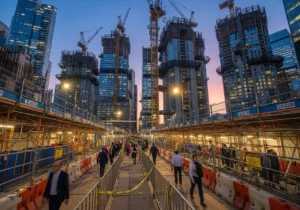
One complexity in urban construction zones is differentiating between workers (contractors, subcontractors, labourers) and members of the public (pedestrians, delivery persons, visitors). The rights and legal routes may differ:
- Workers: Typically covered by workers’ compensation when the fall occurs on the job site. They may not be able to sue their employer, but may have third-party claims if another party’s negligence (e.g., equipment supplier) contributed.
- Non-workers / Public: May pursue a premises liability claim if construction zone hazards affected them and a responsible party owed them a duty of care.
Because of these distinctions, it’s critical to identify immediately who you are (worker vs. visitor) and what legal avenue applies.
9. Preventive Measures: What Responsible Parties Should Be Doing
To reduce risk of slip/trip/fall in urban construction zones, responsible parties should implement robust safety and maintenance regimes. Best practices include:
- Clear and continuous pedestrian routing, with signage and safe surfaces around work zones.
- Regular inspections of walkways, sidewalks, ramps and adjacent public access areas; prompt repair of defects.
- Housekeeping to remove debris, secure cables, loose materials, uneven surfaces and spills.
- Good lighting, especially at dawn/dusk or in covered pedestrian passages around construction sites.
- Proper barricades, guardrails and warning signs at changes in elevation, drop-offs, trenches or temporary surfaces.
- Training site supervisors and workers to monitor external pedestrian zones and public access areas, not just internal construction zones.
Such measures reduce human suffering — and reduce liability exposure. While this blog is aimed at claimants, it’s helpful for you to be aware of what should have been done to demonstrate negligence when it wasn’t.
10. How to Navigate Your Claim: Practical Guide
If you’ve fallen or been injured in a construction-adjacent zone in an urban area, here’s a practical roadmap:
- Seek medical treatment and follow up until full recovery (or stabilize condition).
- Preserve evidence: photos/videos of hazard, your injuries, incident report, work orders or site logs if accessible.
- Report the incident to the responsible party (site manager, property owner, local authority). Ensure your report is documented.
- Document your losses: keep receipts, wage-loss records, medical bills, rehabilitation costs, pain/suffering impact.
- Consult an experienced attorney in premises liability or construction injury law to evaluate your case — especially if multiple parties may be liable.
- Be mindful of deadlines/statute of limitations – delay may jeopardize your case.
- Understand the insurance company tactics: adjusters may try to downplay your injury, surveillance your activities or push lowball offers. Be cautious about social media posts.